Updated · May 2026 · ES2026 Edition

Is JavaScript
a Programming Language?

A deep, honest, and complete answer — covering history, mechanics, core concepts, frameworks, quirks, debates, and why JS runs almost everything on the web in 2026.

JS const answer = "Yes, absolutely — and here's why.";
98.8%Websites use JS
30 yrsLanguage age (1995)
#1Most used language
~20MJS developers
ES2026Current standard
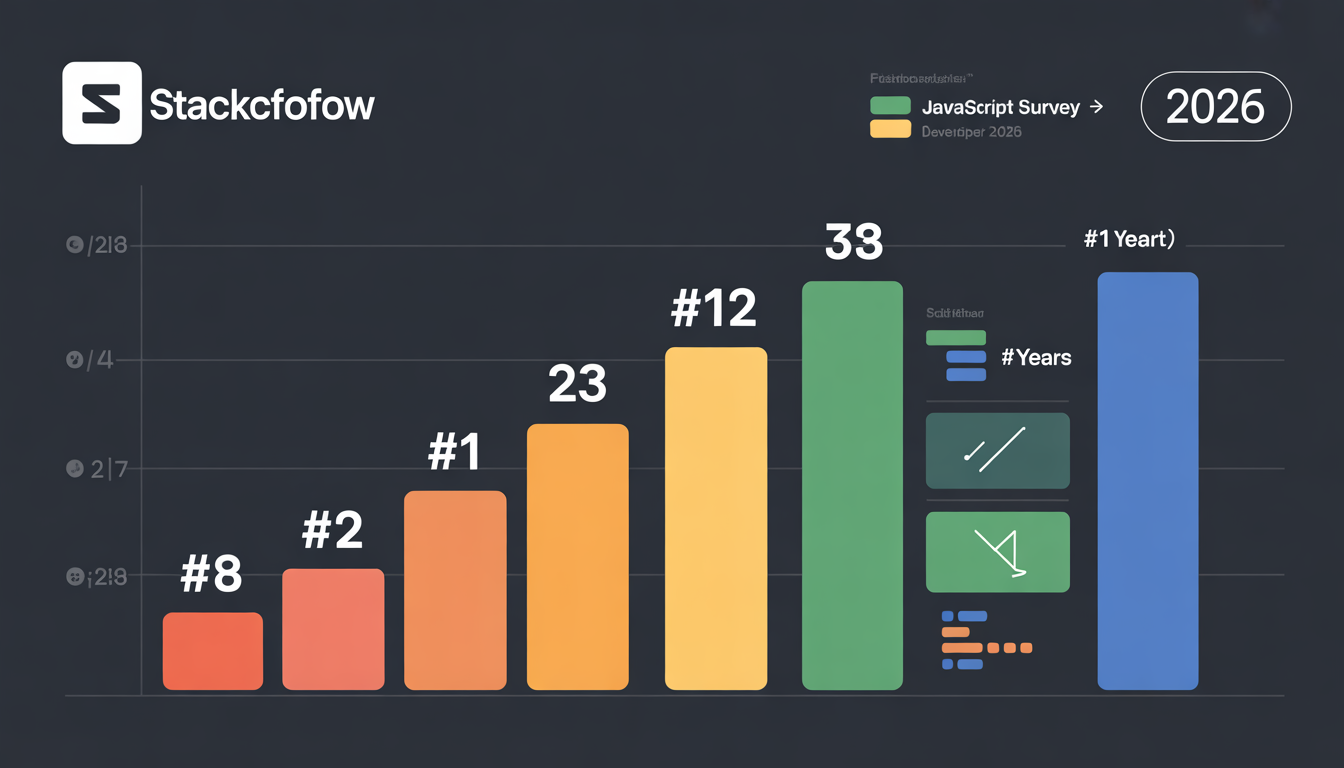
Stack Overflow Developer Survey — JavaScript most used language 12 years
What Exactly Is JavaScript?

Yes — JavaScript is a fully-fledged programming language.

JavaScript is a high-level, interpreted, dynamically typed, multi-paradigm programming language conforming to the ECMAScript specification. It is Turing-complete — meaning it can theoretically solve any computational problem a computer can solve. It supports variables, conditionals, loops, functions, recursion, closures, objects, promises, generators, and complex data structures. By every academic and practical definition, JavaScript is a real programming language — not a "scripting toy," not a "markup language," and absolutely nothing like HTML or CSS. HTML describes structure. CSS describes appearance. JavaScript describes behavior — and behavior is what programming languages do.

Quick clarification: When people ask "Is JavaScript a real programming language?" they're often influenced by two misconceptions: (1) that "scripting languages" aren't "real" programming languages, and (2) the name similarity to Java. Both are wrong. Scripting languages are a subset of programming languages, and JavaScript's name is a 1990s marketing accident. We'll address both in detail below.

The Language the Web Runs On

JavaScript was created in 1995 by Brendan Eich at Netscape Communications in just 10 days. Originally called "Mocha," then "LiveScript," it was renamed "JavaScript" purely for marketing reasons — to capitalize on the enormous hype surrounding Java at the time. The name caused decades of confusion. Java and JavaScript are as related as "car" and "carpet."

Today, JavaScript runs in every web browser on earth — Chrome, Firefox, Safari, Edge, Opera, and every mobile browser. Via Node.js, it runs on servers. Via React Native and Expo, it powers iOS and Android apps. Via Electron, it runs VS Code, Slack, Discord, and Figma. Via Cloudflare Workers, it executes at network edges across the globe. Via TensorFlow.js, it runs machine learning models in the browser. JavaScript is the only programming language on earth that runs natively in the browser — and that single fact gives it a reach no other language can match.

As of 2026, JavaScript has been the most widely used programming language for 12 consecutive years according to the Stack Overflow Developer Survey — a streak no other language has ever matched. More than 98.8% of all websites use JavaScript. The npm registry hosts over 2.5 million packages. Roughly 20 million developers worldwide write JavaScript professionally.

modern-js.js
// JavaScript in 2026 — a mature, expressive language
class Developer {
  // Class fields (ES2022+)
  #name;
  #skills = [];

  constructor(name) {
    this.#name = name;
  }

  learn(skill) {
    this.#skills.push(skill);
    return this; // fluent API
  }

  // Getter with computed value
  get profile() {
    return {
      name: this.#name,
      skills: [...this.#skills],
      count: this.#skills.length
    };
  }
}

// Modern async/await with error handling
async function fetchDeveloperData(id) {
  const response = await fetch(`/api/devs/${id}`);
  if (!response.ok) throw new Error(`HTTP ${response.status}`);
  const { name, role, skills } = await response.json();
  return { name, role, skills };
}

// Functional composition — JS excels here
const topJsDevs = developers
  .filter(d => d.skills.includes('JavaScript'))
  .sort((a, b) => b.experience - a.experience)
  .slice(0, 10)
  .map(({ name, role }) => (`${name} — ${role}`));

// Quick Facts

Created1995 by Brendan Eich at Netscape Communications — in just 10 days
Standardized AsECMAScript (ECMA-262) — currently ES2026 (ES17), released June 2026
ParadigmMulti-paradigm: Object-Oriented, Functional, Event-Driven, Imperative, Prototype-based
Runs OnBrowser, Server (Node.js / Bun / Deno), Mobile (React Native), Desktop (Electron), Edge (Cloudflare Workers), IoT (Espruino)
TypingDynamically and weakly typed. TypeScript adds optional static typing as a strict superset
Rank#1 most-used language for 12 consecutive years (Stack Overflow Developer Survey)
EngineV8 (Chrome/Node.js/Bun), SpiderMonkey (Firefox), JavaScriptCore (Safari)
LicenseOpen standard — free to use, implement, and extend. ECMA-262 spec is publicly available
JavaScript engine inside browser
Why JavaScript Qualifies as a Programming Language
🔄

Turing Complete

JavaScript can compute anything that is mathematically computable. It supports loops, conditionals, recursion, and arbitrary memory access. Turing completeness is the gold standard definition of a "real" programming language — JS passes it completely.

🧱

First-Class Functions

Functions in JS are values. You can assign them to variables, pass them as arguments, return them from other functions, and store them in arrays and objects. This enables powerful patterns like callbacks, closures, higher-order functions, and functional programming.

📦

Rich Data Structures

Arrays, Objects, Maps, Sets, WeakMaps, WeakSets, Iterators, Generators, TypedArrays, ArrayBuffers — JavaScript ships a comprehensive suite of data structures for organizing and transforming complex information at scale.

🔁

Multi-Paradigm

Write in object-oriented style with classes and inheritance, functional style with pure functions and immutability, reactive style with events and callbacks, or imperative procedural style. JavaScript doesn't force one approach — it supports all of them.

⚙️

Control Flow

JavaScript supports all standard control flow constructs: if/else, switch/case, for loops, while loops, do-while, for-of, for-in, try/catch/finally, break, continue, and labeled statements — everything a general-purpose language needs.

🏗️

Abstraction Mechanisms

Classes, modules, closures, prototypes, iterators, generators, decorators (ES2026) — JavaScript provides multiple levels of abstraction, enabling developers to build from simple utility functions to complex, layered enterprise architectures.

JavaScript Is a Programming Language — Not "Just" a Scripting Language
The "scripting language" label has dogged JavaScript since 1995. Here's a thorough, evidence-based breakdown of why that label — even when technically applied — does not diminish JavaScript's status as a full programming language, and why the distinction itself is largely a myth.

The Label Was Never an Insult — It Became One by Accident

When JavaScript was named a "scripting language" in 1995, the term simply meant: a language that runs inside a host environment (the browser) and automates tasks within it. It was a neutral technical description — the same way Bash is a "scripting language" for the Unix shell, or Lua is a "scripting language" for game engines. It was never meant to mean "lesser," "toy," or "not real." The confusion arose because early JavaScript (1995–2007) was genuinely limited — there was no server-side JS, no JIT compilation, no module system, and it was used almost exclusively for trivial UI effects. People confused the limitations of the early implementation with a permanent ceiling on the language itself. That ceiling was shattered long ago.

❌ The Myth

"Scripting languages aren't real programming languages"

  • "Scripting languages are just glue code — they connect real programs but can't build them"
  • "You can't build real applications with a scripting language"
  • "Scripting languages aren't compiled — so they're not serious"
  • "JavaScript doesn't have proper types, classes, or modules — it's amateur hour"
  • "Real languages run standalone; scripting languages need a host"
  • "JavaScript can only do basic browser tricks — it's not for serious software"
✅ The Reality

Scripting languages ARE programming languages — and JS has outgrown even that label

  • "Scripting language" is a subcategory of programming language — Python, Ruby, Bash, Lua, Perl are all "scripting languages" AND real programming languages
  • VS Code, Slack, Discord, and Figma are built with JavaScript — billion-dollar real applications
  • V8 JIT-compiles JavaScript to native machine code at runtime — it is compiled, just not ahead-of-time
  • ES6+ gives JS private class fields, static types via TypeScript, and ES Modules — as modern as any language
  • Node.js runs standalone on servers; Bun and Deno are complete runtime environments
  • LinkedIn, Uber, Netflix, Airbnb, and PayPal are powered by Node.js backends
JavaScript type coercion table — truthy and falsy values

Turing Completeness

A language must be able to compute anything that is theoretically computable — infinite loops, arbitrary branching, recursion, and memory manipulation. JavaScript passes this definitively.

while(true){} // infinite loop ✓

Formal Specification

Programming languages have a formal grammar and specification. JavaScript is standardized as ECMAScript (ECMA-262) — a 900-page formal spec maintained by TC39. This is more formal than most languages have.

ECMA-262 / ES2026 (ES17)

Abstract Data Types

Programming languages must support abstract data structures. JS ships Arrays, Objects, Maps, Sets, WeakMaps, WeakSets, TypedArrays, Promises, Iterators, Generators — a richer stdlib than many "serious" languages.

Map, Set, WeakRef, Symbol ✓

Control Flow Constructs

if/else, switch, for, while, do-while, for-of, for-in, try/catch/finally, break/continue, labeled statements — JavaScript has every control flow construct a general-purpose language requires.

try { } catch(e) { } finally { }

Abstraction & Encapsulation

Classes with private fields (#field), closures, modules, Proxies, Symbols — JS provides rich abstraction mechanisms at every level of the language, from primitive to system.

class Foo { #private = 42; }

I/O & System Access

Via Node.js, JS has full filesystem access, network sockets, child processes, streams, cryptography, OS signals, and more. Via the browser, it controls the DOM, camera, microphone, GPU (WebGPU), and storage.

fs, net, crypto, process, fetch ✓

First-Class Functions

Functions are values in JavaScript — storable, passable, returnable, composable. This enables higher-order functions, closures, functional programming patterns, and the entire React model.

const fn = () => {}; arr.map(fn);

Module System

ES Modules (import/export) give JS a statically-analyzable, tree-shakeable, standards-compliant module system — supported natively in browsers, Node.js, Bun, Deno, and all modern runtimes.

import { fn } from './module.js'

Concurrency Model

Promises, async/await, Worker Threads, SharedArrayBuffer, Atomics, the Event Loop — JS has a fully-realized concurrency model, different from threads but equally powerful for I/O-bound work.

async/await + Worker Threads ✓
❌ Myth

"Scripting languages aren't compiled — they're just interpreted line by line, which makes them slow and unserious."

✅ Reality

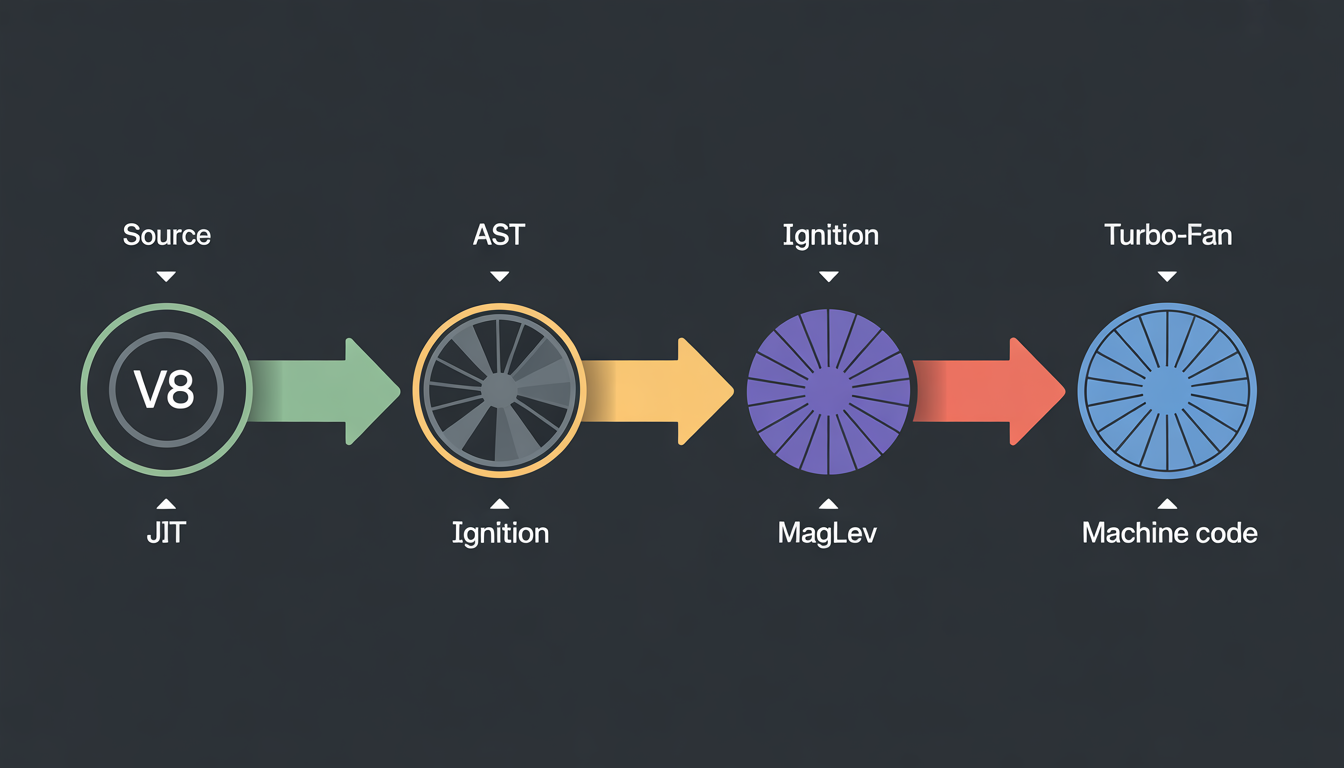
Modern JavaScript engines use multi-tier JIT compilation. V8 (Chrome/Node.js) uses Ignition (bytecode) → Maglev (mid-tier JIT) → TurboFan (optimizing JIT). Hot code paths are compiled to highly optimized native machine code. JS benchmarks routinely beat PHP, Ruby, and Python — languages nobody calls "not serious."

V8 JIT compilation pipeline — Ignition, Maglev, TurboFan
❌ Myth

"JavaScript can only run in a browser — it's not a standalone language."

✅ Reality

JavaScript runs completely outside the browser via Node.js (2009), Deno (2018), and Bun (2022). These are standalone runtimes — just like Python's interpreter or Ruby's MRI. You can build CLI tools, HTTP servers, databases, desktop apps, and cloud functions entirely in JavaScript with no browser involved.

Node.js server running JavaScript outside the browser
❌ Myth

"JavaScript doesn't have types — it's not a real language. Real languages have type systems."

✅ Reality

JavaScript has a type system — it is dynamically typed, which is a design choice, not a deficiency. Python, Ruby, Lisp, Erlang, Clojure, and Smalltalk are all dynamically typed — nobody claims they're "not real languages." Additionally, TypeScript adds a world-class static type system on top of JavaScript that rivals C# and Kotlin for expressiveness.

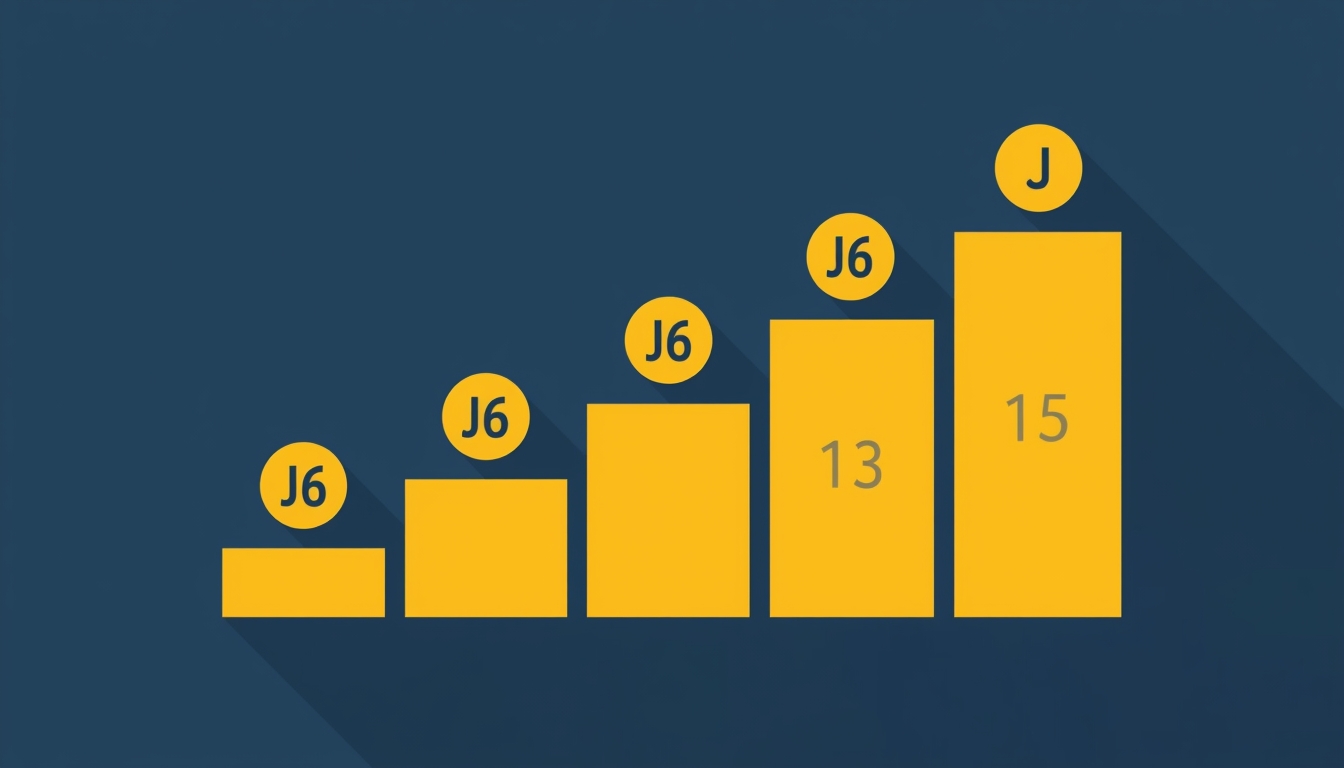
TypeScript adoption rising over the years
❌ Myth

"JavaScript can't build real software — only websites and small scripts."

✅ Reality

VS Code (world's most popular code editor) is JavaScript/TypeScript. Slack, Discord, WhatsApp Desktop, and Figma are Electron (JavaScript) apps. LinkedIn, Uber, Netflix, Airbnb, and PayPal run Node.js on their backends. If JavaScript can power billion-user applications, it definitively builds "real software."

VS Code built with Electron (JavaScript)
❌ Myth

"Scripting languages are for automation and glue code — programming languages are for building real systems."

✅ Reality

This is a 1990s distinction that no longer maps to reality. Python — universally called a "scripting language" — powers Google's ML infrastructure, Instagram's web backend, and NASA's data pipelines. The automation/glue distinction described early languages' typical use-cases, not their inherent capabilities. Use-case and capability are completely different things.

❌ Myth

"JavaScript doesn't have proper OOP — no real classes, no encapsulation, no inheritance."

✅ Reality

ES6+ JavaScript has full class syntax with constructors, inheritance (extends), static methods, and getters/setters. ES2022 added private class fields (#field) for true encapsulation. ES2026 adds decorators. JavaScript's prototype-based inheritance is actually more powerful than classical OOP — it's a deliberate design, not an omission.

JavaScript prototype chain inheritance diagram

// The "Scripting" Spectrum — All Are Real Programming Languages

BashShell scripting
LuaGame scripting
PHPWeb scripting
PerlText scripting
RubyWeb scripting
PythonGeneral scripting
JavaScriptWeb + Universal
TypeScriptTyped JS superset
JavaGeneral purpose
C++Systems language
RustSystems language
Historically called "scripting" — all are real programming languages
JavaScript — spans both categories, now general-purpose
Traditionally called "programming" languages — no meaningful difference in power
📖

The Formal Definition

Academically, a "scripting language" is one that: (1) runs inside a host environment rather than directly on hardware, (2) is typically interpreted or JIT-compiled rather than compiled ahead-of-time, and (3) is designed to control or extend a host application. By this definition, JavaScript qualifies — it runs inside browsers, Node.js, and other host environments.

But here's the key: this definition describes a deployment model, not a capability ceiling. A language being "hosted" says nothing about how powerful, expressive, or general-purpose it is. The host environment just provides the runtime — the language itself determines what you can build.

🔬

Why the Line Is Blurry

C runs "inside" operating systems — does that make it a scripting language? Java runs "inside" the JVM — scripting language? Python runs "inside" its interpreter — scripting language? The host-environment definition breaks down immediately when applied consistently, because nearly every language runs inside some kind of runtime or OS layer.

The truth is: the scripting/programming distinction is a historical artifact of the 1990s computing culture — when "scripting" meant simple task automation (shell scripts, batch files) and "programming" meant compiled system code. That era's assumptions have no bearing on 2026 JavaScript.

🚀

JavaScript Has Transcended the Label

Even if you accept "scripting language" as a valid category, JavaScript has grown so far beyond its original scripting role that the label is actively misleading in 2026. JavaScript runs standalone server processes (Node.js), compiles to native code (via JIT), powers operating-system-level tooling (build systems, package managers), and executes machine learning inference — none of which are "scripting" activities in any traditional sense.

The label describes where JavaScript started — not what it has become. Calling modern JavaScript a "scripting language" is like calling a commercial aircraft a "glider." Technically related by lineage; completely different in reality.

not-just-scripting-proof.js
// ─── JavaScript doing things "scripting languages" supposedly can't ───

// 1. SYSTEMS-LEVEL: Spawning child processes, reading OS signals
import { spawn } from 'node:child_process';
import process from 'node:process';
process.on('SIGTERM', () => { console.log('Caught SIGTERM — graceful shutdown'); });

// 2. NETWORKING: Raw TCP socket server
import net from 'node:net';
const server = net.createServer(socket => {
  socket.write('Hello from raw TCP\r\n');
  socket.pipe(socket);
});
server.listen(3000);

// 3. CRYPTO: Generating cryptographic keys
import { generateKeyPairSync, createSign } from 'node:crypto';
const { privateKey, publicKey } = generateKeyPairSync('rsa', { modulusLength: 4096 });
const signature = createSign('SHA256').update('data').sign(privateKey);

// 4. CONCURRENCY: True multi-threading with Worker Threads
import { Worker, isMainThread, parentPort } from 'node:worker_threads';
if (isMainThread) {
  const worker = new Worker(import.meta.url);
  worker.on('message', msg => console.log('From thread:', msg));
} else {
  // Heavy computation on a real separate thread — no GIL!
  const result = expensiveComputation();
  parentPort.postMessage(result);
}

// 5. MACHINE LEARNING: Inference in pure JavaScript
import * as tf from '@tensorflow/tfjs-node';
const model = await tf.loadLayersModel('file://./model/model.json');
const prediction = model.predict(tf.tensor2d([[1, 2, 3, 4]]));
// → ML inference, running in Node.js, no Python required

// These are not "scripting" tasks. These are systems programming tasks.
// JavaScript does all of them. The label has not kept up with the language.
⚖️

The Verdict: JavaScript Is a General-Purpose Programming Language

It started as a scripting language for browsers. It grew into a general-purpose programming language. "Scripting language" describes its origin, not its nature. By every formal criterion — Turing completeness, formal specification, abstraction mechanisms, I/O capabilities, concurrency model, module system, and real-world application scope — JavaScript qualifies unambiguously as a full programming language. The debate was settled not by argument, but by the billions of lines of JavaScript powering the modern world.

30 Years of JavaScript
From a 10-day prototype to the world's most-used programming language — the remarkable, unlikely story of how JavaScript conquered computing.
1995
Born in 10 Days
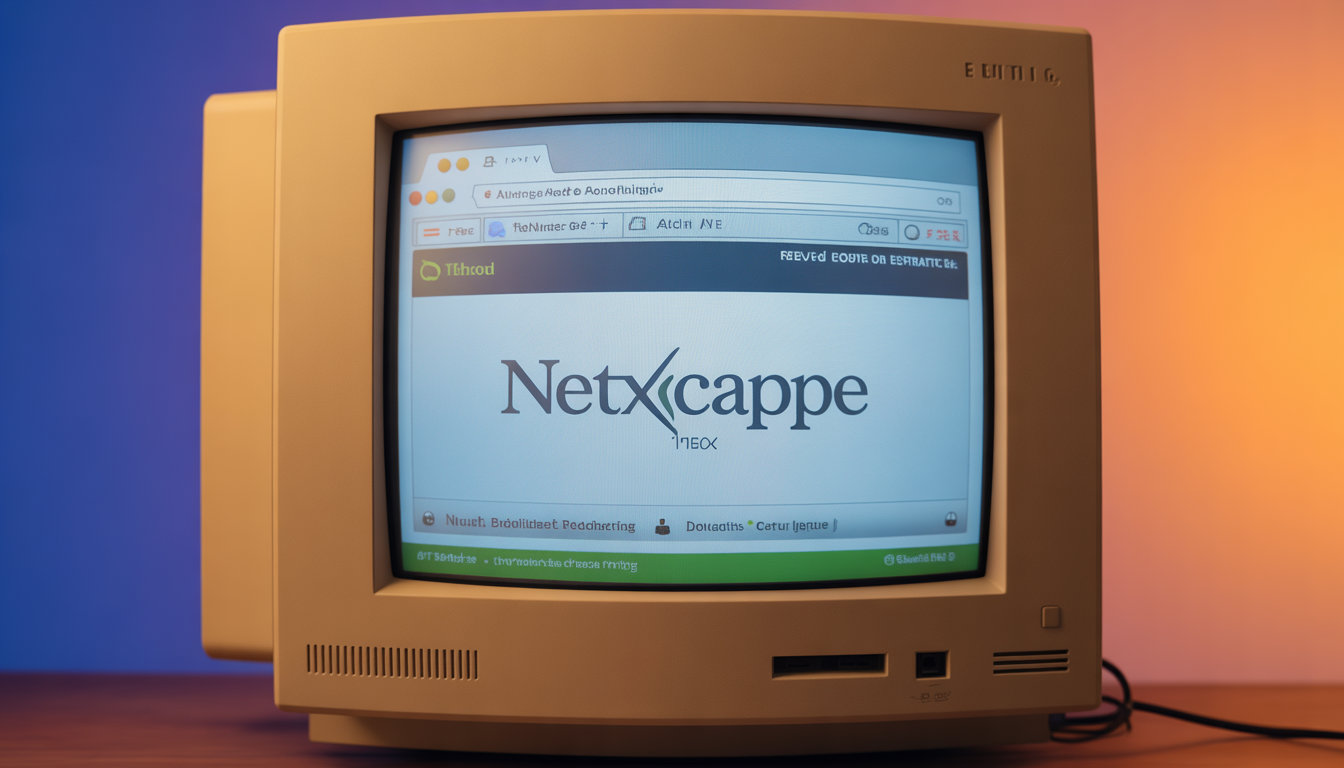
Netscape Navigator 1995 — birthplace of JavaScript
Brendan Eich created JavaScript in just 10 days while at Netscape Communications, initially called Mocha, then LiveScript, then renamed "JavaScript" to ride Java's marketing wave. It shipped in Netscape Navigator 2.0 to enable basic interactivity on web pages.
Why it mattered: For the first time, web pages could respond to user actions — validate form inputs, show alerts, create dropdown menus — without a round-trip to the server. The web went from static documents to interactive experiences.
Brendan Eich, creator of JavaScript
Origin
1996–1997
Microsoft's JScript & the Browser Wars
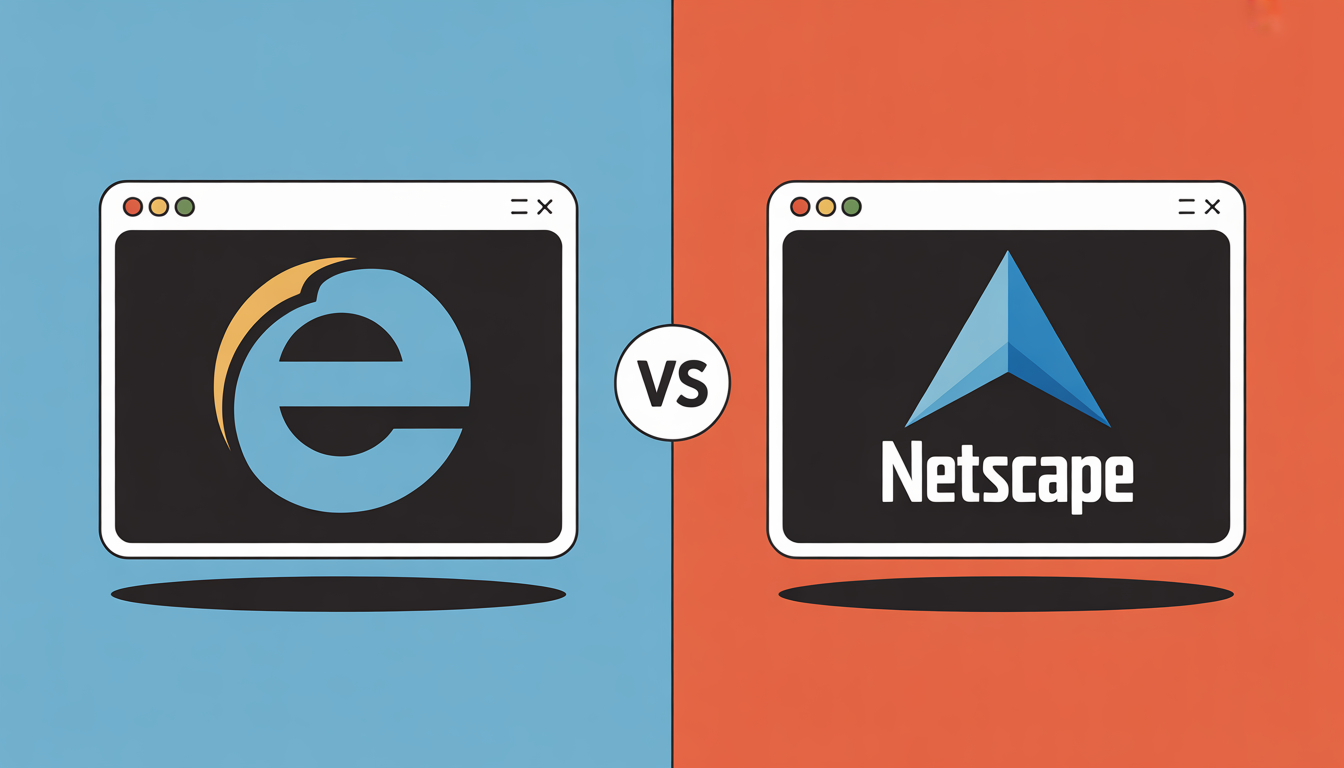
Netscape vs Internet Explorer — the browser wars
Microsoft reverse-engineered JavaScript for Internet Explorer, calling it "JScript" to avoid trademark issues. The two implementations diverged, forcing developers to write code that worked differently in each browser — a nightmare that lasted over a decade.
Why it mattered: This fragmentation drove the eventual standardization effort. In 1997, JavaScript was submitted to ECMA International, resulting in the ECMAScript 1 standard — the foundation all modern JS engines implement.
Browser Wars
1999
AJAX & the Dynamic Web Revolution
XMLHttpRequest — originally a proprietary Microsoft API — enabled web pages to fetch data from servers asynchronously, without full page reloads. This capability, later called AJAX (Asynchronous JavaScript and XML), transformed what web applications could do.
Why it mattered: Google Maps (2005) and Gmail (2004) were built on AJAX. They demonstrated that web apps could match the speed and fluidity of desktop software. The web application era had begun — and JavaScript was its engine.
Breakthrough
2006
jQuery Democratizes JavaScript
jQuery — write less, do more (2006)
John Resig released jQuery with the tagline "write less, do more." It abstracted away the gnarly browser inconsistencies of the era, making DOM manipulation, AJAX calls, and animations accessible to millions of developers who couldn't master raw cross-browser JS.
Why it mattered: At its peak, jQuery ran on 77% of the top million websites. It proved that the JS community could build shared abstractions that accelerated everyone. Though largely superseded today, jQuery fundamentally shaped how developers thought about JavaScript.
Ecosystem
2008
Google V8 — JavaScript Gets Fast
Google V8 JavaScript engine — JIT compilation
Google released the V8 JavaScript engine for Chrome, using just-in-time (JIT) compilation to convert JS to native machine code at runtime. This made JavaScript dramatically faster — in some benchmarks, 10–100× faster than contemporary interpreters.
Why it mattered: Speed was the existential question for JavaScript. If JS was too slow, developers would abandon it. V8 answered that question definitively. Without V8, there's no Node.js, no React, no modern JS ecosystem. It changed everything.
Performance
2009
Node.js — JavaScript Escapes the Browser
Node.js — JavaScript on the server side
Ryan Dahl embedded V8 into a server-side runtime called Node.js, enabling JavaScript to run outside the browser for the first time. He was inspired by a progress bar on Flickr's upload page that froze while reading files — Node's non-blocking I/O was his fix.
Why it mattered: JavaScript became a general-purpose language overnight. Developers could write both front-end and back-end in the same language, sharing code, logic, and even types (later via TypeScript). The era of full-stack JavaScript began.
Server-Side
2010–2012
npm, Backbone, Angular 1 — The Ecosystem Emerges
npm registry — the world's largest software ecosystem
npm (Node Package Manager) launched in 2010, creating a centralized registry for JavaScript packages. Backbone.js (2010) and Angular.js (2010) introduced MVC patterns to the front-end, while Express.js (2010) became the go-to web framework for Node.js.
Why it mattered: npm became the largest software registry in history. The ability to publish and consume packages with a single command created a powerful flywheel: more packages → more developers → more packages. This ecosystem advantage is still JavaScript's greatest competitive moat.
Ecosystem
2013–2014
React & the Component Revolution
React component-based UI — app preview
Facebook released React in 2013, introducing the concept of UI as a pure function of state, a virtual DOM for efficient re-rendering, and a component-based architecture. The same year, Evan You built the first version of Vue.js as a personal project.
Why it mattered: React's component model changed how developers think about building UIs — not as pages with DOM mutations, but as composable, declarative trees of components. This mental model is now universal across frameworks and languages.
Frameworks
2015
ES6 / ES2015 — The Modern Era Begins
ES6 / ECMAScript 2015 — the modern JavaScript era begins
ECMAScript 2015 (ES6) was the most significant language update in JavaScript's history after its creation. After years of stagnation (ES5 was 2009), ES6 delivered a complete modernization: arrow functions, classes, template literals, destructuring, default params, Promises, modules (import/export), let/const, Symbols, Proxies, Maps, Sets, generators, and iterators.
Why it mattered: ES6 is the dividing line between "old JavaScript" and "modern JavaScript." Virtually every piece of code written today uses ES6+ syntax. The annual release cadence established with ES6 ensures JavaScript continuously evolves — ES2025, ES2026, and beyond.
Major Release
2016–2019
TypeScript Wins, Async/Await Lands
TypeScript adoption rise — 2016 to 2019
TypeScript, Microsoft's statically-typed superset of JavaScript, went from an interesting experiment to an industry standard. Async/await (ES2017) made asynchronous code read as simply as synchronous code. Next.js (2016) made full-stack React practical.
Why it mattered: TypeScript adoption solved JavaScript's biggest weakness — runtime type errors in large codebases. Major projects like VS Code, Angular, and eventually React itself moved to TypeScript. By 2026, TypeScript is the default for most professional JS projects.
Maturity
2020–2023
Deno, Bun & the Runtime Renaissance
Bun and Deno — new JavaScript runtimes 2022
Ryan Dahl returned with Deno — a Node.js rewrite with native TypeScript support, built-in security sandboxing, and a standard library. In 2022, Jarred Sumner released Bun, a blazing-fast all-in-one JS runtime written in Zig that runs JS/TS up to 4× faster than Node.
Why it mattered: Competition between runtimes improved the entire ecosystem. Node.js adopted features from Deno (native fetch, --watch mode). Bun's speed benchmarks forced the entire industry to think harder about JavaScript performance at the runtime level.
Runtime Era
2025–2026
ES2026, AI Integration & Edge Computing
Machine learning running in the browser with JavaScript
ECMAScript 2026 ships decorator syntax, explicit resource management (using declarations for automatic cleanup), Array.groupBy, Iterator helpers, and Promise.withResolvers. JavaScript is now deeply embedded in AI tooling — LLM SDK integrations, browser-side inference with ONNX.js, and AI-powered developer tools are all primarily JavaScript.
Why it matters now: Edge computing via Cloudflare Workers, Vercel Edge Functions, and Deno Deploy puts JS at the network edge — milliseconds from users globally. The language born as a 10-day hack now runs at the backbone of global internet infrastructure.
Cloudflare Workers — JavaScript at the edge
Current
How JavaScript Actually Works
Understanding JavaScript's execution model — from source code to pixels on screen — reveals why it behaves the way it does, and why it's so well-suited for interactive applications.
1

Parsing & Abstract Syntax Tree (AST)

When JavaScript code is loaded, the engine first tokenizes it — breaking the raw text into tokens (keywords, identifiers, operators, literals). Then the parser converts those tokens into an Abstract Syntax Tree (AST): a hierarchical data structure representing the code's grammatical structure.

Tools like Babel, ESLint, Prettier, and TypeScript all work by parsing JS into an AST and then analyzing or transforming it. The AST is the foundation of the entire JavaScript tooling ecosystem.

2

JIT Compilation — Not Just Interpretation

JavaScript is often described as "interpreted," but modern engines like V8 use a sophisticated multi-tiered JIT (just-in-time) compilation pipeline. V8 specifically uses: Ignition (bytecode interpreter) → Maglev (mid-tier JIT) → TurboFan (optimizing JIT compiler).

Frequently executed "hot" code paths get progressively optimized — eventually compiled down to highly efficient native machine code. This is why modern JavaScript can match or exceed the performance of older compiled languages for many workloads.

V8 JIT pipeline diagram — Ignition, Maglev, TurboFan
3

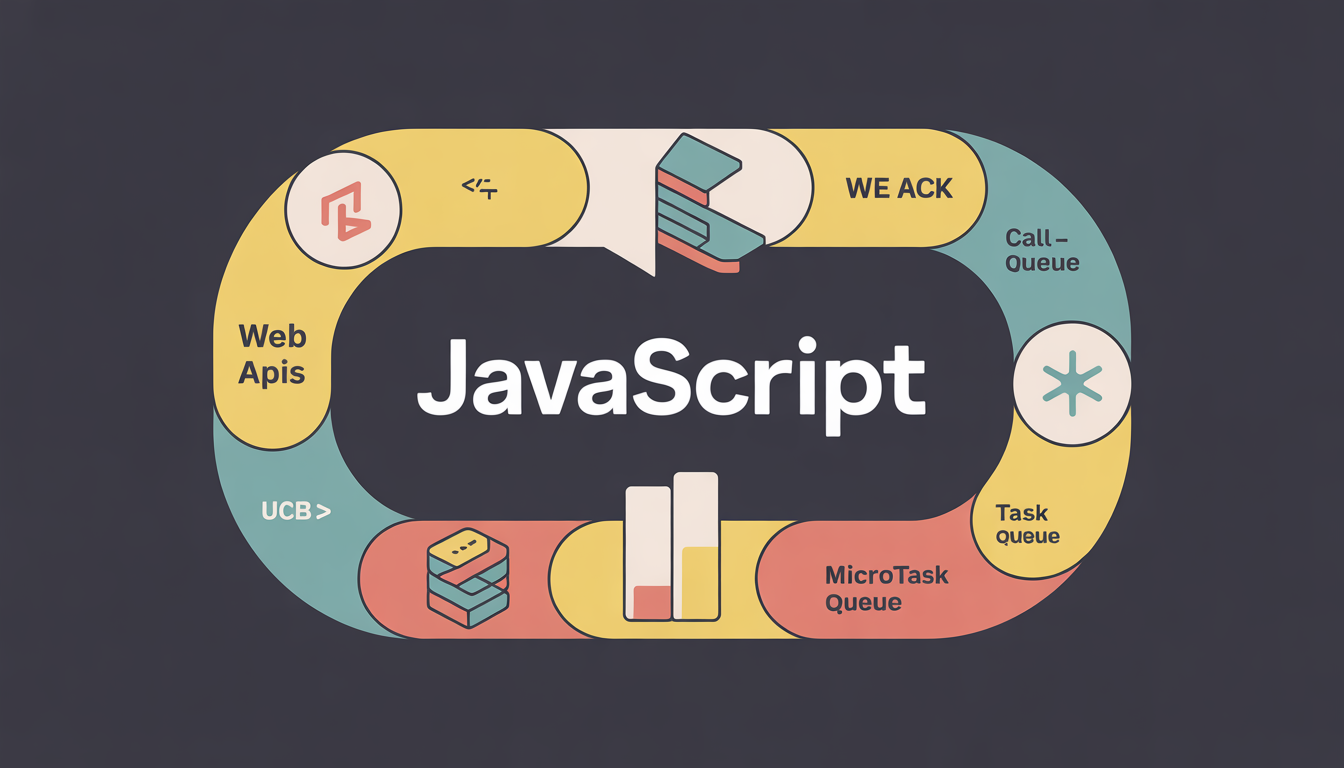
The Event Loop — Single-Threaded but Non-Blocking

JavaScript runs on a single thread — one call stack, one piece of code executing at a time. Yet it handles thousands of concurrent network requests, timers, and UI events without freezing. How? The Event Loop.

When you call fetch(), setTimeout(), or addEventListener(), these are handed off to Web APIs (browser) or libuv (Node.js) running on separate threads. When they complete, their callbacks are placed in the Task Queue or Microtask Queue. The Event Loop continuously checks: "Is the call stack empty?" If yes, it pulls the next callback in — giving JavaScript non-blocking concurrency without multi-threading complexity.

JavaScript Event Loop diagram — call stack, task queue, microtask queue
4

Execution Context, Scope & Hoisting

Every time JavaScript runs code — a script, a function, eval() — it creates an Execution Context with its own variable environment, scope chain reference, and this binding. The Global Execution Context is created first; function calls push new contexts onto the call stack.

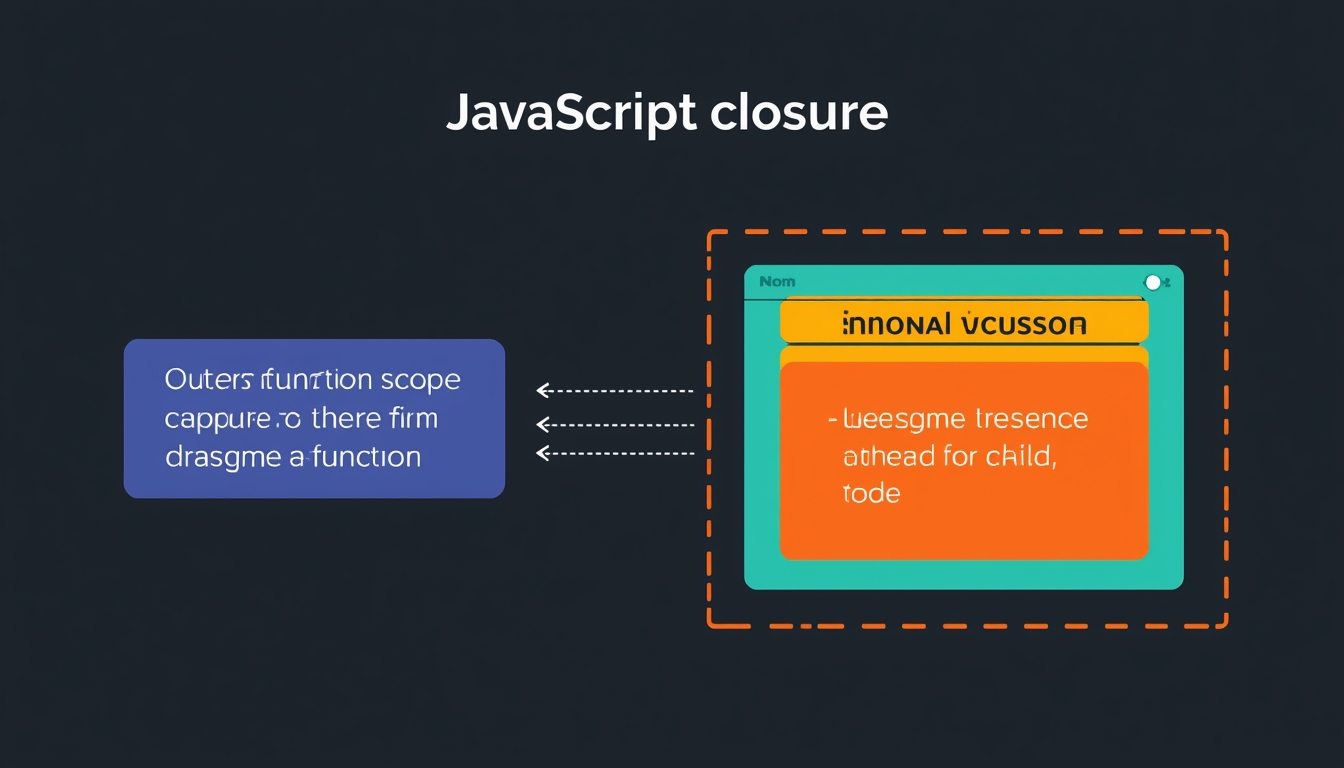
Hoisting is a result of how the engine processes declarations before execution: var declarations are hoisted and initialized to undefined; let/const are hoisted but uninitialized (the Temporal Dead Zone). Closures occur when an inner function retains access to its outer function's scope chain even after the outer function returns.

JavaScript closures — visual explanation of scope and closure
5

Garbage Collection & Memory Management

JavaScript manages memory automatically via garbage collection. The engine periodically identifies objects that are no longer reachable from any "root" (global variables, the call stack, active closures) and frees their memory.

V8 uses a generational garbage collector: most objects die young (short-lived temporaries), so V8 uses a fast "minor GC" for young objects and a slower "major GC" for long-lived objects. Understanding this helps avoid memory leaks — the most common being uncleared timers, forgotten event listeners, and unintentional global variables.

6

Prototype Chain & Inheritance

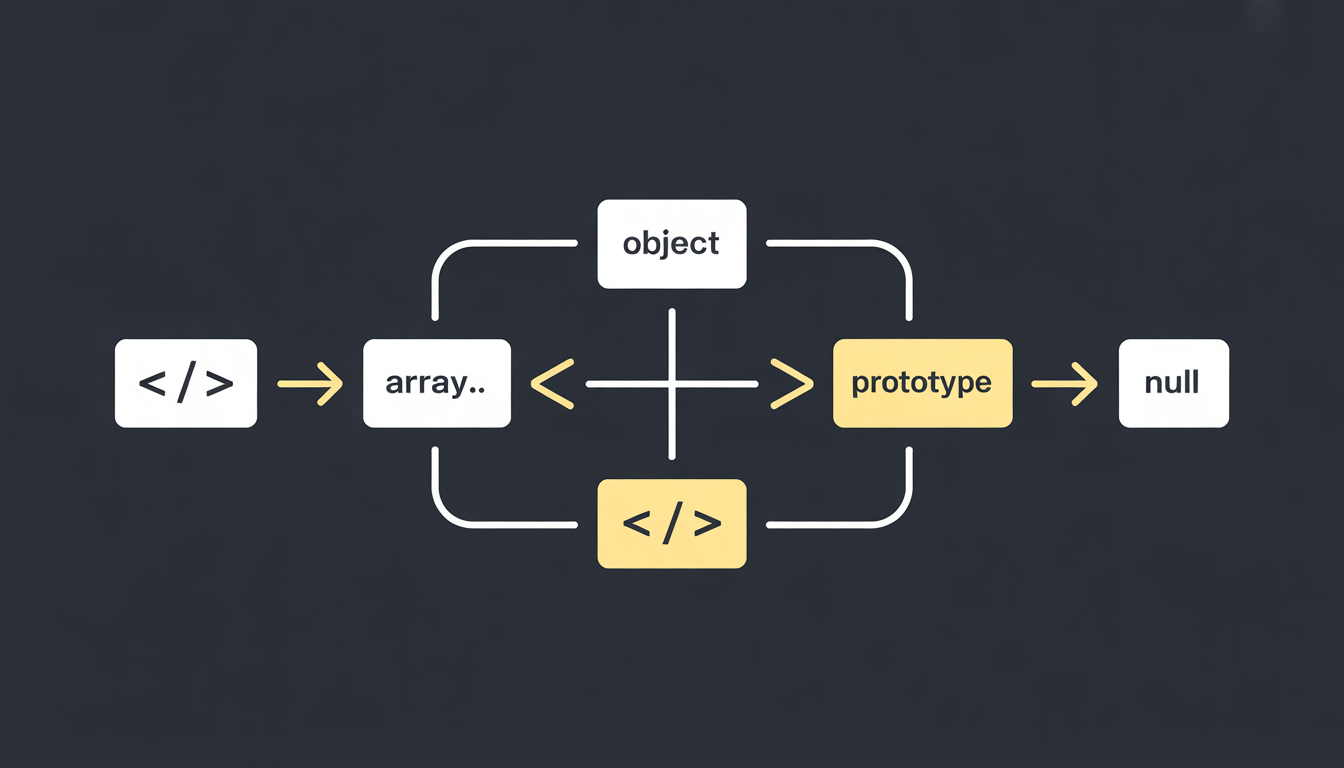
JavaScript uses prototypal inheritance, not classical inheritance. Every object has an internal [[Prototype]] link to another object (its prototype). When you access a property, JS first checks the object itself, then walks up the prototype chain until it finds it or reaches null.

ES6 class syntax is syntactic sugar over prototypes — it doesn't change the underlying mechanism, just makes the common patterns cleaner to write. Understanding prototypes explains why instanceof works, why array methods are shared across all arrays (via Array.prototype), and how JavaScript's flexible object system actually operates.

JavaScript prototype chain — object inheritance diagram
event-loop-demo.js
// Visualizing the Event Loop — execution order might surprise you
console.log('1: Script starts');        // → runs immediately (synchronous)

setTimeout(() => {
  console.log('4: Macro task (setTimeout)'); // → Task Queue (runs last)
}, 0);

Promise.resolve().then(() => {
  console.log('3: Microtask (Promise)');      // → Microtask Queue (runs before Tasks)
});

queueMicrotask(() => {
  console.log('3b: Also a microtask');        // → Also Microtask Queue
});

console.log('2: Script ends');             // → runs immediately (synchronous)

// Output order: 1 → 2 → 3 → 3b → 4
// Key insight: Microtasks (Promise callbacks) ALWAYS run before Macro tasks (setTimeout)
// even with setTimeout(fn, 0)

// ── Closures in action ──
function makeCounter(start = 0) {
  let count = start; // captured by closure

  return {
    increment: () => ++count,
    decrement: () => --count,
    value: () => count,
    reset: () => { count = start; }
  };
}

const counter = makeCounter(10);
counter.increment(); counter.increment();
console.log(counter.value()); // 12 — count is private, only accessible via closure
What Makes JavaScript Unique?
The key language features that define JavaScript's character — explaining both its remarkable power and its infamous quirks.
🔀

Dynamic Typing

Variables in JS are untyped containers — they can hold any value, and that value can change type at runtime. A variable can start as a number, become a string, and then hold an object — all legally.

This flexibility speeds up prototyping but introduces bugs that only appear at runtime. TypeScript adds optional static typing that catches type errors at compile time without changing JavaScript's runtime behavior.
typeof "hello" // "string"
🔒

Closures

A closure is a function that retains access to variables from its outer (enclosing) scope even after that outer function has finished executing and its execution context has been removed from the call stack.

Closures are the foundation of module patterns, factory functions, partial application, memoization, and React hooks (useState, useEffect are closure-based). They're one of JavaScript's most powerful and initially counterintuitive features.
JavaScript closures visual diagram
inner fn + outer scope = closure

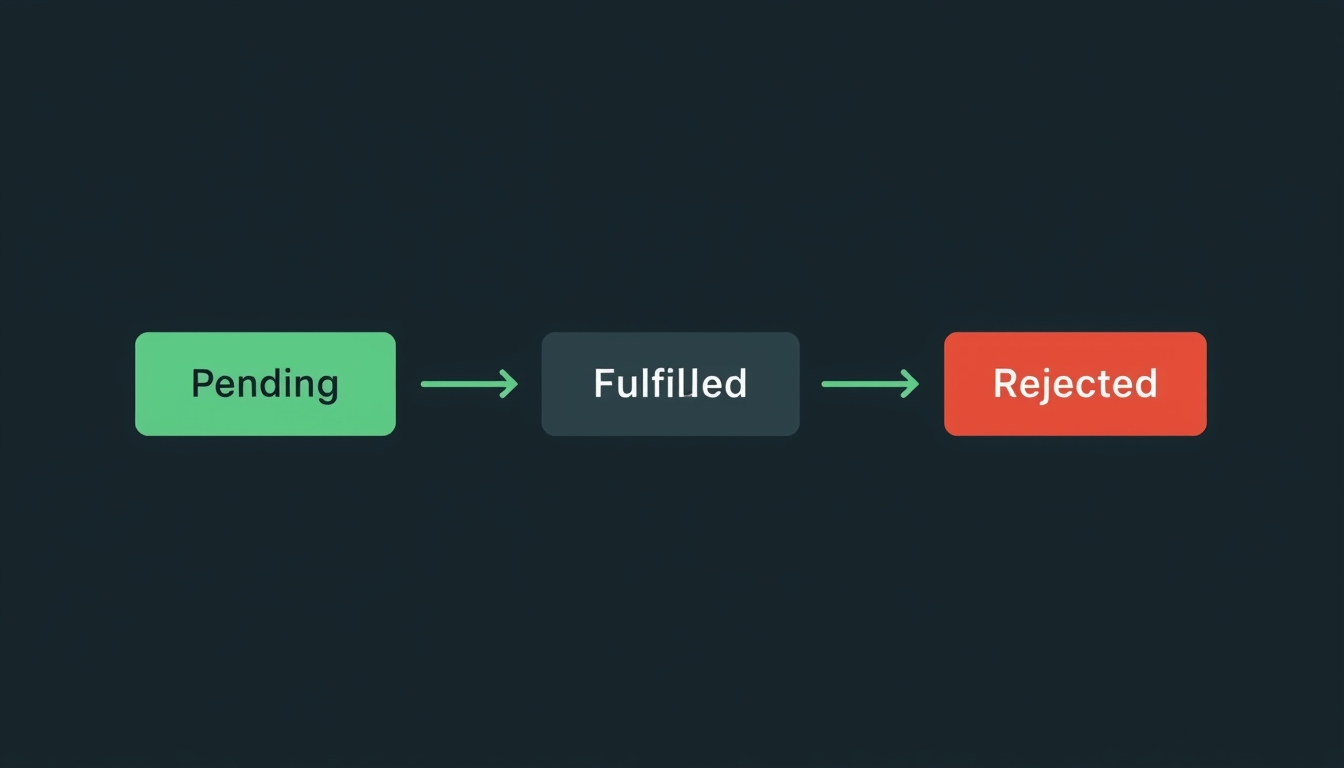
Promises & Async/Await

JavaScript handles asynchronous operations via the Promise API and async/await syntax (ES2017). Promises represent future values — operations that will eventually resolve to a value or reject with an error.

async/await is syntactic sugar over Promises that makes asynchronous code read synchronously. Combined with try/catch for error handling, it's one of JavaScript's most elegant features. Under the hood, every async function returns a Promise.
Async/await flow — Promise resolution diagram
async fn + await = clean async
📦

Prototype Chain & Classes

JavaScript uses prototypal inheritance — objects inherit directly from other objects through a prototype chain, rather than from class blueprints. ES6 class syntax is clean syntactic sugar over this prototype system.

Every JavaScript object has a hidden [[Prototype]] link. When you access a property, JS searches the object, then its prototype, then its prototype's prototype, until hitting null. Understanding this explains: why all arrays share methods (via Array.prototype), how instanceof works, and why classes behave differently from classical OOP in subtle ways.
JavaScript prototype chain diagram
obj → proto → Object.prototype → null
🌊

Event-Driven Programming

JavaScript applications are fundamentally reactive — code responds to events rather than running sequentially. Click, scroll, keypress, network response, timer completion, WebSocket message — all trigger callbacks through the Event Loop.

This event-driven model is what makes JavaScript feel "alive" in the browser. It also makes Node.js extremely efficient at I/O — instead of waiting (blocking) for file reads or network calls, Node registers a callback and moves on, handling thousands of concurrent operations on a single thread.
JavaScript event loop — event-driven programming diagram
el.addEventListener('click', fn)
🧩

ES Modules

Modern JavaScript uses ES Modules (ESM) via import/export for organizing code into reusable, encapsulated units. Modules have their own scope, run in strict mode by default, and are statically analyzable.

Static analysis of imports/exports enables tree-shaking — bundlers like Rollup and webpack can eliminate unused code from final bundles, dramatically reducing file sizes. ESM is now the standard in browsers, Node.js 12+, Deno, Bun, and Cloudflare Workers — the era of CommonJS (require/module.exports) is ending.
import { fn } from './module.js'
🔄

Generators & Iterators

Generator functions (function*) can be paused and resumed, yielding values one at a time. They implement the iterator protocol, making custom objects iterable with for-of loops.

Generators enable lazy evaluation (computing values on demand rather than all at once), infinite sequences, co-routines, and elegant async control flow. Redux-Saga uses generators to manage complex async side effects. Understanding generators deepens your understanding of how async/await is implemented under the hood.
function* gen() { yield 1; yield 2; }
🔬

Proxies & Reflect

The Proxy object (ES2015) intercepts fundamental operations on objects — property access, assignment, deletion, function invocation. Reflect provides the same operations as methods.

Proxies enable meta-programming in JavaScript: building reactive systems (Vue 3's reactivity is proxy-based), validation layers, observable objects, and ORM-style APIs. They're one of JavaScript's most powerful — and least-used — features, reserved for framework authors and advanced use cases.
new Proxy(target, { get, set })
modern-features.js
// ── ES2026 Features — Decorators & Explicit Resource Management ──

// Decorators (ES2026) — declarative class modification
function readonly(target, context) {
  context.addInitializer(function() {
    Object.defineProperty(this, context.name, { writable: false });
  });
}

class Config {
  @readonly
  API_URL = 'https://api.example.com';
}

// Explicit Resource Management (ES2026) — using declarations
// Automatically calls [Symbol.dispose]() when leaving scope
function processFile(path) {
  using handle = openFile(path); // auto-closed on scope exit
  return handle.read();
}

// Iterator Helpers (ES2026) — lazy, chainable operations on iterables
const result = [1, 2, 3, 4, 5]
  .values()
  .filter(x => x % 2 === 0)   // lazy — no intermediate array
  .map(x => x * 10)
  .toArray();  // [20, 40]

// Array.groupBy (ES2026) — finally built-in grouping
const people = [
  { name: 'Alice', dept: 'Engineering' },
  { name: 'Bob', dept: 'Design' },
  { name: 'Carol', dept: 'Engineering' }
];
const byDept = Object.groupBy(people, p => p.dept);
// { Engineering: [{Alice}, {Carol}], Design: [{Bob}] }
JavaScript's Famous Quirks — Explained
JavaScript has some behaviors that consistently confuse developers. These aren't random bugs — they're consequences of deliberate (if questionable) design decisions made in 1995. Understanding why they exist is more useful than just knowing they exist.
JavaScript quirks — the famous WAT moments explained
⚠️ Type Coercion Surprises
0 == false // true "" == false // true null == undefined // true 0 == "0" // true 0 == "" // true "0" == false // true (!)
The loose equality operator (==) performs type coercion before comparing — converting values to a common type first. The rules are complex and inconsistent.
JavaScript type coercion table
✅ Fix: Always use strict equality (===) which checks both value AND type without coercion. Most style guides ban == entirely.
⚠️ typeof null === "object"
typeof null // "object" ← bug! typeof undefined // "undefined" typeof [] // "object" typeof {} // "object" Array.isArray([]) // true ← use this
typeof null returning "object" is a 30-year-old bug from JavaScript's original implementation that cannot be fixed because it would break too much existing code.
✅ Fix: Use null checks (value === null), Array.isArray() for arrays, and instanceof for specific types.
⚠️ NaN is Not Equal to Itself
NaN === NaN // false (!!) NaN == NaN // false typeof NaN // "number" (ironic) isNaN("hello") // true (coerces!) Number.isNaN("hello") // false ✓
NaN (Not a Number) is the only value in JavaScript that is not equal to itself — a consequence of IEEE 754 floating-point arithmetic. This makes NaN checks uniquely tricky.
✅ Fix: Always use Number.isNaN() (not the global isNaN()) to safely check for NaN without type coercion.
⚠️ Floating Point Arithmetic
0.1 + 0.2 // 0.30000000000000004 0.1 + 0.2 === 0.3 // false (!) (0.1 * 10 + 0.2 * 10) / 10 === 0.3 // true
JavaScript uses IEEE 754 double-precision floating-point for all numbers. Decimal fractions like 0.1 cannot be represented exactly in binary floating-point — this is not a JavaScript bug, but a fundamental limitation of binary arithmetic shared by most languages.
✅ Fix: Use integer arithmetic where precision matters (work in cents, not dollars), or use a library like decimal.js for financial calculations.
⚠️ "this" Context Binding
const obj = { name: 'Alice', greet: function() { return this.name; // 'Alice' ✓ }, greetArrow: () => { return this.name; // undefined ✗ } };
The value of this in JavaScript is determined by how a function is called, not where it's defined. Arrow functions don't have their own this — they inherit it from the surrounding lexical scope.
✅ Fix: Use arrow functions inside methods when you need to preserve this. Use explicit binding with .bind(), .call(), or .apply() when needed.
⚠️ var Hoisting & Scope
console.log(x); // undefined (not error!) var x = 5; // var is function-scoped, not block-scoped: for (var i = 0; i < 3; i++) {} console.log(i); // 3 — leaks out!
var declarations are hoisted to the top of their function scope and initialized to undefined. They also leak out of blocks like if statements and for loops — only function boundaries create new scope for var.
✅ Fix: Never use var. Use const by default, let when you need reassignment. Both are block-scoped and more predictable.
Major JavaScript Frameworks
JavaScript's vast ecosystem is one of its greatest competitive advantages. These frameworks have shaped how modern software is built.
React

React

UI Library — Front-End

Created by Facebook/Meta in 2013, React pioneered the component-based UI paradigm. Its virtual DOM diffing algorithm and unidirectional data flow model became industry standards adopted by competing frameworks.

React application UI preview
React's core idea: UI = f(state) — the interface is a pure function of application state. Change the state, React re-renders efficiently. This simple mental model scales from todo apps to Meta's billion-user newsfeed.
GitHub Stars
225K+
Creator
Meta
Since
2013
Web Apps · React Native · Next.js · SSR
Vue.js

Vue.js

Progressive Framework — Front-End

Created by ex-Google engineer Evan You in 2014, Vue is celebrated for its gentle learning curve, elegant API, and progressive nature — you can add it to any page with a script tag or build a full SPA.

Vue 3's Composition API (analogous to React Hooks) allows logic to be organized by feature rather than by component lifecycle, making complex components dramatically easier to read and maintain.
GitHub Stars
207K+
Creator
Evan You
Since
2014
Web Apps · Nuxt.js · SPAs
Angular

Angular

Full Framework — Enterprise

Google's Angular (2016, a full rewrite of AngularJS) is an opinionated, batteries-included framework built with TypeScript at its core. It provides everything: routing, forms, HTTP client, dependency injection, testing, and CLI.

Angular's opinion is its strength: in large teams, conventions eliminate bikeshedding. Every Angular project looks and feels the same — a huge advantage for enterprise organizations managing many developers and codebases.
GitHub Stars
95K+
Creator
Google
Since
2016
Enterprise · Large Teams · PWAs
Svelte

Svelte

Compiler — Front-End

Svelte (2016) takes a radically different approach: it's a compiler, not a runtime framework. Svelte compiles your components to vanilla JavaScript at build time, generating minimal, highly optimized output with no virtual DOM overhead.

SvelteKit (the meta-framework, like Next.js for React) is gaining rapid adoption for its performance, developer experience, and remarkably small bundle sizes. Svelte consistently ranks as the most-loved framework in developer surveys.
GitHub Stars
79K+
Creator
Rich Harris
Since
2016
Web Apps · SvelteKit · Small Bundles
Next.js

Next.js

Full-Stack Meta-Framework

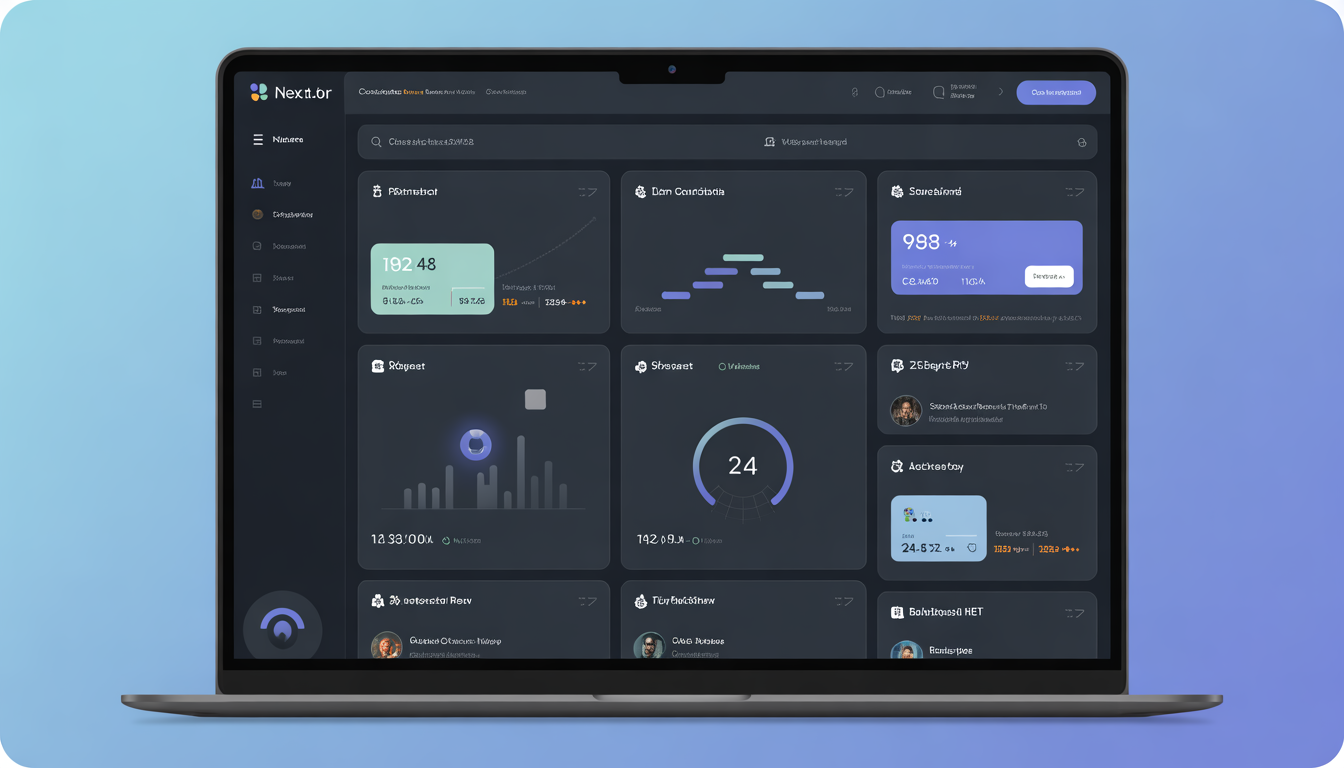
Next.js by Vercel has become the de facto standard for production React applications. Its App Router (React Server Components), automatic code splitting, optimized image handling, and zero-config TypeScript support make it the fastest path to a production-ready web app.

Next.js dashboard — full-stack React application
Server Components (Next.js 13+) are a paradigm shift: render components on the server, send only HTML to the client for zero JS overhead — or mix server and client components at any component tree level. This pattern is influencing the entire web framework ecosystem.
GitHub Stars
123K+
Creator
Vercel
Since
2016
Full-Stack · SSR · E-Commerce · SaaS
Express.js

Express.js

Web Framework — Back-End

Express.js (2010) is the minimalist, un-opinionated web framework for Node.js. With over a billion npm downloads, it's the foundational layer for building HTTP servers, REST APIs, and middleware chains in the Node ecosystem.

Express's power is its simplicity: it adds just enough structure over Node's raw http module — routing, middleware, request/response helpers. Hono (2022) and Fastify are modern successors with better TypeScript support and significantly higher performance.
npm Downloads
1B+/mo
Creator
TJ Holowaychuk
Since
2010
REST APIs · Middleware · Microservices
JavaScript Runtimes in 2026
The runtime landscape has evolved dramatically. Node.js is no longer the only option for running JavaScript outside the browser — competition has driven rapid innovation across the entire ecosystem.
Industry Standard Node.js

Node.js v22+

The original JavaScript server runtime, powering the majority of JS backends worldwide. Node.js 22 includes native fetch, --watch mode, native test runner, and improved ESM support. The most mature, best-documented, and most widely deployed JS runtime.

LTS Support V8 Engine npm Ecosystem
Fast Rising Bun

Bun v1+

All-in-one runtime, bundler, test runner, and package manager. Built with Zig for maximum performance — Bun runs JS/TS up to 4× faster than Node.js in benchmarks, installs packages 25× faster than npm, and has native TypeScript and JSX support with zero config.

JavaScriptCore Engine Built-in Bundler Node.js Compat
Security-First Deno

Deno v2

Ryan Dahl's Node.js reimagining with native TypeScript, a permission-based security sandbox (no file/network access by default), a built-in standard library, and JSR (JavaScript Registry) as an alternative to npm. Deno 2 added Node.js compatibility.

V8 Engine Permission Sandbox Built-in TypeScript
Edge Computing Cloudflare Workers

Cloudflare Workers

V8 Isolates running JavaScript at Cloudflare's 300+ edge locations globally — sub-millisecond cold starts, no containers, no VMs. Workers use a subset of the Web Platform API (fetch, Cache, KV, R2, Durable Objects) rather than Node.js APIs.

Cloudflare Workers edge network — global JS execution
V8 Isolates 300+ Edge Locations Web APIs
Browser Browser Engines

Browser Engines

The original JavaScript runtime: V8 (Chrome/Edge), SpiderMonkey (Firefox), JavaScriptCore (Safari). All fully support ES2026, WebAssembly, Service Workers, WebGPU, and the full Web API surface. The browser remains where 98.8% of all users encounter JavaScript.

JavaScript engine inside web browser
ES2026 Support DOM & Web APIs DevTools
Serverless AWS Lambda

AWS Lambda / Vercel Edge

Serverless JavaScript execution — Node.js functions on AWS Lambda scale from zero to millions of requests with no infrastructure management. Vercel Edge Functions bring the same model with V8 Isolates for faster cold starts and global distribution.

Auto-Scaling Pay-Per-Invocation Zero Ops
Pros & Cons of JavaScript
Every language involves tradeoffs. Here is JavaScript's honest, balanced scorecard — the strengths that make it dominant, and the genuine weaknesses worth knowing before you commit.

✅ Strengths

  • Runs everywhere — browser, server, mobile, desktop, edge, IoT. No other language has this reach. The "universal language" advantage is real and economically valuable.
  • Largest ecosystem on earth — npm hosts 2.5M+ packages covering virtually every use case imaginable. Almost any problem you face, someone has solved it and published a package.
  • Genuinely fast — V8's JIT compilation produces near-native performance for most workloads. Modern JS is not the "slow scripting language" of 2005; benchmark comparisons often surprise.
  • Full-stack with one language — same JS/TS for front-end and back-end enables code sharing, type sharing (with TypeScript), and smaller, more versatile teams.
  • Largest developer talent pool — hiring, community, tutorials, StackOverflow answers, and conference content are all unmatched. ~20 million JS developers worldwide.
  • Non-blocking async I/O — the Event Loop handles thousands of concurrent connections efficiently on a single thread. Ideal for I/O-bound workloads like APIs and real-time apps.
  • Low barrier to entry — open a browser's DevTools console and start coding immediately. No compiler, no IDE setup, no installation required to learn.
  • Flexible paradigm support — OOP, functional, reactive, event-driven: use the style that fits your problem without fighting the language.
  • Extremely fast iteration loop — no compile step in development, instant feedback in the browser. Tight feedback loops accelerate learning and feature development alike.
  • TypeScript escape hatch — when you need strong typing, TypeScript layers it on without leaving the JS ecosystem. You can be as strict or as loose as your project demands.

⚠️ Weaknesses

  • Type coercion quirks — 0 == false is true; typeof null is "object". Mitigated by always using === and TypeScript. But these warts exist.
  • Single-threaded — CPU-intensive tasks (image processing, cryptography, data crunching) block the Event Loop. Mitigated by Worker Threads in Node.js, but adds complexity.
  • npm dependency complexity — node_modules can contain thousands of packages. Deeply nested transitive dependencies create supply-chain security risks.
  • No native static typing — TypeScript is opt-in. Pure JavaScript provides no type safety, making large untyped codebases fragile and hard to refactor. Adoption of TypeScript in new projects is strongly recommended.
  • Tooling fatigue — webpack, Vite, Rollup, esbuild, Turbopack, Parcel; Babel, SWC; ESLint, Biome. The build tooling landscape is vast and changes rapidly.
  • Silent failures — weak typing and missing error checks allow bugs to propagate silently until runtime. A typo in a property name just returns undefined instead of throwing — bugs hide.
  • Weak for data science — Python's NumPy, Pandas, scikit-learn, PyTorch ecosystem completely dominates. JavaScript's data science tooling (Observable, Danfo.js) is maturing but not competitive.
  • Not a systems language — no manual memory management, no direct hardware access, no real threads. Use Rust, C++, or Go for systems programming needs. WebAssembly bridges this gap for browser-specific use cases.
  • Remaining browser inconsistencies — most are resolved, but Safari (WebKit) still lags on some APIs. Cross-browser testing remains necessary for production web apps.
  • Callback and async complexity — deeply nested async operations can still become hard to read and debug even with async/await, particularly with complex error handling requirements.
JavaScript vs Other Languages
How JavaScript stacks up against major programming languages across the metrics that matter to working developers. No language wins everything — the right choice depends on your specific use case.
Language Type System Primary Use Performance Learning Curve Front-End Back-End Best For Survey Rank
JavaScript JavaScript Dynamic Web · Full-Stack Fast (JIT) Easy ✅ Native ✅ Node / Bun Universal web apps, APIs, real-time #1
TypeScript TypeScript Static (opt) Web · Full-Stack Fast (JIT) Medium ✅ Native ✅ Node / Bun Large codebases, teams, enterprise #5
Python Python Dynamic AI · Data · Scripts Medium Easy ❌ Limited ✅ Django/Flask ML/AI, data science, scripting, research #2
Java Java Static Enterprise · Android Fast (JVM) Hard ❌ No ✅ Spring Boot Enterprise backends, Android, large teams #3
Rust Rust Static Systems · WASM Fastest Very Hard ⚠️ Via WASM ✅ Yes Systems, game engines, CLI tools, WASM #14
Go Go Static Backend · APIs · DevOps Fast Medium ❌ No ✅ Native APIs, microservices, CLIs, cloud infra #8
Swift Swift Static iOS · macOS Fast Medium ❌ No ⚠️ Limited Native iOS, macOS, tvOS apps #17
PHP PHP Dynamic Web · CMS Medium Easy ❌ No ✅ Laravel Content sites, WordPress, legacy web apps #6
Bottom line: No single language is best for everything. JavaScript wins on reach, ecosystem size, and front-end necessity. Python wins on ML/AI and data science. Go wins on raw backend throughput with simple concurrency. Rust wins on systems-level performance. TypeScript is what you write when JavaScript isn't enough by itself. Choose based on what you're building, not tribalism.
What Can You Build with JavaScript?
JavaScript's reach spans virtually every platform and domain in modern software development. Here's what developers are actually building with it in 2026.
🌐

Web Applications

JavaScript web application — React UI preview

SPAs, dashboards, e-commerce platforms, social networks — the core use case that made JS famous. React, Vue, or Angular + a back-end API is the most common architecture in modern software.

React · Vue · Angular · Svelte
Real examples: Twitter, Airbnb, Netflix, GitHub UI, Google Maps
🖥️

Server-Side APIs

Node.js server-side API

REST APIs, GraphQL servers, WebSocket backends, microservices, and webhook handlers. Node.js and Bun power some of the highest-traffic APIs on the internet.

Express · Fastify · Hono · tRPC
Real examples: LinkedIn API, Uber backend services, PayPal APIs
📱

Mobile Apps

React Native mobile app built with JavaScript

Cross-platform iOS and Android apps sharing a single JavaScript/TypeScript codebase. React Native achieves near-native performance by rendering to real native UI components, not WebViews.

React Native · Expo
Real examples: Facebook, Instagram, Shopify, Coinbase mobile apps
🖱️

Desktop Apps

VS Code desktop app built with Electron (JavaScript)

Electron packages web apps as native desktop applications with access to the filesystem, OS notifications, and native menus. Tauri (using Rust as backend) offers dramatically smaller file sizes.

Electron · Tauri
Real examples: VS Code, Slack, Discord, Figma, WhatsApp Desktop
🤖

AI & Machine Learning

Machine learning in the browser with TensorFlow.js

TensorFlow.js and ONNX.js run ML inference directly in the browser or Node.js. LLM API clients, AI-powered UIs, chatbots, and real-time AI features are increasingly JavaScript-first.

TensorFlow.js · ONNX.js · LangChain.js
Real examples: Real-time pose detection, browser-side sentiment analysis, AI code assistants

Serverless & Edge

Cloudflare edge computing with JavaScript Workers

Cloudflare Workers, Vercel Edge Functions, and AWS Lambda execute JavaScript at the network edge — milliseconds from users globally — with zero infrastructure management and instant auto-scaling.

Cloudflare Workers · Vercel · AWS Lambda
Real examples: Shopify's storefront APIs, Netlify Edge Functions, image resizing at edge
🔧

Developer Tooling

The JavaScript toolchain runs on JavaScript: Vite (bundler), ESLint (linter), Prettier (formatter), Vitest/Jest (testing), TypeScript compiler. The entire JS developer experience is built in JS.

Vite · ESLint · Prettier · Vitest · Turborepo
Meta-fact: The tools that build JavaScript apps are themselves JavaScript apps
🎮

Games & Interactive 3D

Browser games, WebGL 3D graphics, physics simulations, interactive data visualizations, and immersive canvas animations — JavaScript powers a thriving browser-based creative coding scene.

Three.js · Babylon.js · Phaser · PixiJS
Real examples: Sketchfab 3D viewer, browser-based Wordle clones, D3.js data visualizations
🔌

IoT & Embedded

JavaScript on microcontrollers? Yes — Espruino runs JS on ARM Cortex-M chips. Johnny-Five enables Node.js to control Arduino hardware via Firmata. JS everywhere, literally.

Espruino · Johnny-Five · Tessel
Use cases: Smart home sensors, LED control, robotics prototyping, educational hardware
🧪

Testing & Automation

Playwright and Puppeteer automate real browser interactions for end-to-end testing, web scraping, screenshot generation, and CI/CD pipelines. Jest and Vitest cover unit and integration testing.

Playwright · Cypress · Puppeteer · Vitest

Use cases: Visual regression testing, scraping public data, automated form filling, CI test suites
How to Learn JavaScript in 2026
Whether you're starting from scratch or leveling up, here's an opinionated, modern learning path based on what actually matters in the industry today.
Developer learning JavaScript — coding on laptop
1
HTML & CSS Basics
2
JS Fundamentals
3
DOM Manipulation
4
Async JS & Fetch
5
React (or Vue)
6
TypeScript
7
Node.js + APIs
8
Build & Deploy
📖

Stage 1: The Language Itself

Before any framework, understand JavaScript deeply. Variables, types, functions, scope, closures, the Event Loop, Promises, and ES6+ features. Frameworks are abstractions over the language — know the language first.

Best resources: javascript.info (free, comprehensive, excellent), MDN Web Docs (authoritative reference), "You Don't Know JS" book series by Kyle Simpson (deep dives into closures, scope, types, async).
2–4 months to solid fundamentals
⚛️

Stage 2: A Frontend Framework

React is the industry standard and the safest career bet. Learning React teaches component thinking, state management, and declarative UI patterns that transfer to Vue, Svelte, Angular, and any future framework.

Next.js dashboard — learning React in practice
Best resources: react.dev (the official, modern React docs with hooks-first approach). Build real projects — a todo app teaches nothing a weather app or GitHub explorer won't teach better. Use Next.js from the start: it's the production standard.
2–3 months to productive React
🔷

Stage 3: TypeScript

TypeScript is the industry standard for professional JavaScript development. It finds bugs at compile time rather than runtime, vastly improves IDE autocompletion, and makes large codebases dramatically safer to refactor.

TypeScript adoption — why you should learn TypeScript
Key insight: TypeScript is not a separate language — it's JavaScript with optional type annotations that compile away. You can adopt it gradually: add it to an existing JS project file by file, increasing strictness as you go. typescriptlang.org has excellent official docs and a playground.
1–2 months to comfortable TypeScript
🖥️

Stage 4: Node.js & the Back-End

Once you understand the browser side, Node.js lets you write servers, APIs, CLI tools, and scripts in the same language. Build a REST API with Express or Fastify, connect it to a database (PostgreSQL via Prisma is a great starting point), and deploy it.

Node.js back-end server development
Focus areas: HTTP fundamentals (methods, status codes, headers), REST API design, database queries (SQL basics), authentication (JWT, sessions), environment variables and config, error handling, and basic security (CORS, rate limiting, input validation).
2–3 months to build real APIs
The most common mistake: Learning frameworks before understanding the language. Developers who learn React before understanding closures, the Event Loop, and Promises spend months debugging "why doesn't this work" instead of building. Invest 2–4 months in core JavaScript — the returns compound over your entire career.
98.8%Websites use JavaScript
2.5M+npm packages available
12 yrsMost-used language streak
30+Years old (1995–2026)
~20MJS developers worldwide
ES17Current ECMAScript version
Frequently Asked Questions
The most common questions developers and learners ask about JavaScript — answered directly and completely.
Is JavaScript a "real" programming language or just a scripting language? +
JavaScript is a real programming language — unambiguously, by every technical definition. The "scripting language" label comes from JavaScript's original purpose (scripting browser behavior) and is a category of programming language, not a lesser kind. By the formal definition, a programming language is "scripting" if it's typically interpreted and used to automate tasks within a host environment — which describes Python, Ruby, and Bash too. None of these are considered "not real." JavaScript is Turing-complete, multi-paradigm, has a formal specification (ECMAScript), is used to build billion-dollar software, and runs on every computing platform that matters. The debate is over.
📚 Formal definition check: A programming language requires the ability to perform arbitrary computation (Turing completeness) and to express algorithms. JavaScript passes both. The label "scripting language" is a historical and contextual descriptor, not a quality judgment.
Is JavaScript the same as Java? What's the actual difference? +
JavaScript and Java share a name for pure marketing reasons — in 1995, Netscape wanted their new language to benefit from Java's enormous hype. They are otherwise completely unrelated. Java is compiled to bytecode, runs on the JVM (Java Virtual Machine), is statically typed, uses classical class-based inheritance, requires explicit memory management understanding, and was designed for large enterprise systems. JavaScript is JIT-compiled (originally interpreted), runs in browsers and Node.js, is dynamically typed, uses prototypal inheritance, automatically manages memory, and was designed for web interactivity. If you know Java, learning JavaScript will feel like a completely different language — which it is.
Is JavaScript front-end or back-end? +
JavaScript is both — and that's one of its most economically significant properties. Originally (1995–2009), JavaScript was exclusively browser-based (front-end). In 2009, Node.js brought JavaScript to the server (back-end). Today, the same language (and often the same TypeScript types) powers the client interface, the API server, the database queries (via ORMs like Prisma), the build tooling, the deployment scripts, and even the infrastructure-as-code (Pulumi supports TypeScript). Teams can share validation logic, types, utilities, and business rules between front-end and back-end — a productivity advantage that single-language JavaScript/TypeScript stacks offer that no other language ecosystem matches.
Should I learn JavaScript or Python first? +
The right choice depends entirely on your goal. If you want to build websites, web apps, interactive UIs, or anything that runs in a browser — start with JavaScript. Open a browser's DevTools console and start coding immediately with no setup. Results are visual and immediate, which makes learning concrete. If your goal is data science, machine learning, scientific computing, research, or automation scripting — Python is the better first language. Its ecosystem (NumPy, Pandas, scikit-learn, PyTorch, Jupyter) is unmatched for these domains. If you want to be a software engineer building products, JavaScript is likely more immediately employable — the demand for front-end, full-stack, and Node.js developers far exceeds the demand for Python generalists outside of ML/AI teams.
💡 You'll likely learn both eventually. Most professional developers know at least 2–3 languages. JavaScript and Python are the two most valuable to learn first, in whatever order fits your goal.
What is TypeScript and should I learn it? +
TypeScript is a superset of JavaScript created by Microsoft that adds optional static type annotations. It compiles down to plain JavaScript at build time — at runtime, TypeScript doesn't exist, only the compiled JS runs. TypeScript's type system catches type errors before your code runs, dramatically improves IDE autocompletion and refactoring, and serves as documentation for functions and data structures. As of 2026, TypeScript is the industry standard at most professional technology companies — Angular is TypeScript-first, Next.js and React codebases typically use TypeScript, and Node.js backend projects increasingly start with TypeScript from day one. You should learn JavaScript fundamentals first — TypeScript makes more sense once you understand what it's adding types on top of. Then, yes — learn TypeScript. It's not optional for professional JS development anymore.
What is ECMAScript and how does it relate to JavaScript? +
ECMAScript (ES) is the formal specification that defines the JavaScript language — the rules, syntax, semantics, and built-in APIs that all JavaScript engines must implement. JavaScript is the most well-known implementation of ECMAScript. ECMA International (European Computer Manufacturers Association) maintains the spec through their TC39 committee, which includes engineers from Google, Apple, Microsoft, Mozilla, Meta, and other major companies. New versions are released annually: ES2015 (ES6), ES2016 (ES7)... ES2026 (ES17). When you read about "ES6 features" or "ES2022 additions," these refer to features added to the ECMAScript standard in those respective years. Browsers and runtimes implement these standards, which is why you can use ES2026 features in Chrome today — V8 implements ES2026.
Why do some developers criticize or dislike JavaScript? +
The criticisms of JavaScript are historically legitimate — though many are less relevant today. Early JavaScript had severe browser inconsistencies (writing code that worked in IE and Netscape was genuinely painful). The language has genuine type coercion quirks (0 == false, typeof null === "object") that cannot be changed due to backwards compatibility. "Callback hell" — deeply nested async callbacks — was genuinely difficult to read before Promises and async/await. The npm ecosystem's complexity and security issues (thousands of transitive dependencies, occasional supply-chain attacks) are real concerns. "JavaScript fatigue" — the constant churn of new frameworks and build tools — is exhausting. However: TypeScript addresses type safety. async/await solved callback complexity. Modern tooling (Vite, Biome, Bun) dramatically reduces fatigue. Most criticism dates to 2010–2018 JavaScript — modern ES2020+ TypeScript is a genuinely pleasant language to work in.
🔍 Historical context matters: much JS criticism is from developers who had bad experiences with pre-ES6 JavaScript. The language has changed dramatically since then. Form your own opinion from modern JS, not old war stories.
Is JavaScript dying? Is it being replaced? +
No — JavaScript is more dominant in 2026 than at any previous point in its history. This question has been asked approximately every year since 2012, and every year the answer is the same: JavaScript's usage grew. It has held the #1 most-used programming language title for 12 consecutive years. WebAssembly (WASM) is sometimes cited as JavaScript's replacement — but WASM is an assembly-like compilation target designed to complement JavaScript, not replace it. WASM and JavaScript run side-by-side in the browser, with WASM handling computation-heavy work and JavaScript handling UI logic. If anything, JavaScript is the orchestration layer that WASM runs inside. The languages that could theoretically challenge JavaScript — Dart (via Flutter Web), ClojureScript, Elm, ReasonML — have not achieved significant browser adoption. JavaScript's browser monopoly is not a technical advantage — it's a network effect lock-in that no language is positioned to break in the foreseeable future.
Which JavaScript framework should I learn in 2026? +
For most people: learn React + Next.js. React is the most widely deployed front-end library with the largest job market, the most community resources, and an ecosystem (React Native, Expo, Next.js) that covers mobile, full-stack, and static site use cases. If you're interested in a friendlier learning experience with Vue's gentler API, learn Vue + Nuxt.js — it's well-established, beautifully documented, and widely used in Asia and Europe. If you care deeply about performance and minimal bundle size, explore Svelte + SvelteKit — it's beloved by developers for its elegance. If you're entering enterprise development in a Java-heavy organization, Angular may be the practical choice. The framework matters less than depth: knowing React well beats knowing five frameworks superficially. Master one, then others become easy.
⚠️ Don't framework-hop. Pick one, build real projects with it, and develop genuine depth before exploring alternatives. Shallow knowledge of many frameworks is nearly worthless; deep knowledge of one is highly employable.

JavaScript is the language
of the modern web.

Is it a real programming language? Yes — completely, unambiguously, and impressively so. Born in a 10-day sprint in 1995, JavaScript has grown into the most widely used programming language on earth. It runs in every browser, on servers, in mobile apps, on desktops, at the network edge, and on microcontrollers. Its quirks are real but learnable. Its ecosystem is unmatched. Its reach is unique. Whatever you want to build on or for the web, JavaScript — and its typed sibling TypeScript — will take you there.