


What Are AI Chatbots? A Complete Guide

Large Language Models — The Technology Powering AI Chatbots

AI chatbots are software programs powered by large language models (LLMs) that can understand and generate human-like text. They hold conversations, answer questions, write code, summarize documents, and much more — in real time.

Since OpenAI launched ChatGPT in November 2022, the AI chatbot industry has exploded. Today, dozens of companies offer competing products, each with distinct capabilities, pricing, and target audiences.

As of 2026, AI chatbots have gone mainstream — used by students, professionals, developers, creators, and businesses worldwide. Whether you need the best AI chatbot for writing, coding, or research, this guide covers them all.

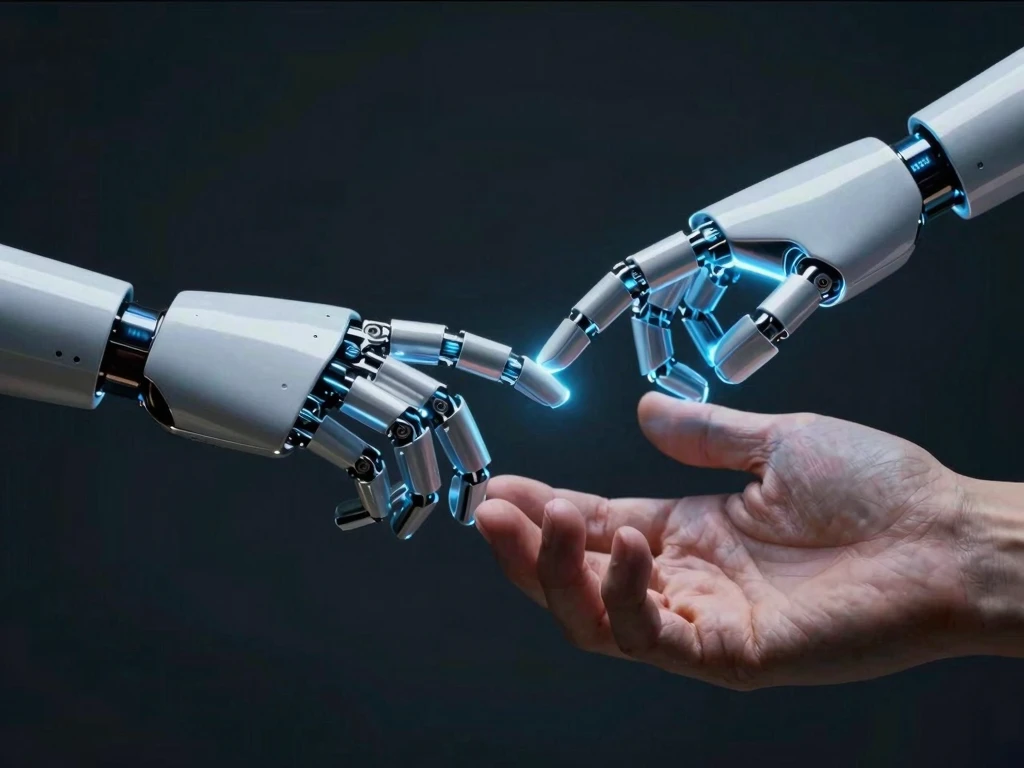
Human interacting with an AI chatbot interface — the future of conversational artificial intelligence

How AI Chatbots Work: Step-by-Step Explanation

Every AI chatbot follows the same core process — from your input to the response you see on screen. Understanding this helps you use them more effectively.

You Type a Prompt

Your text input (called a "prompt") is sent to the AI server. It can be a question, instruction, or just a conversation starter.

Tokenization

Your text is broken into "tokens" (word fragments). The model processes these numerical representations, not raw text.

Transformer Processing

A neural network (transformer architecture) analyzes the tokens, weighing context from billions of training examples.

Token Prediction

The model predicts the most likely next token, one at a time, building a response that is coherent and contextually accurate.

Safety Filtering

Output passes through safety layers to block harmful, misleading, or policy-violating content before it reaches you.

Response Delivered

The final text streams to your screen, often in real time. You can continue the conversation with follow-up questions.

Neural network transformer architecture visualization — how AI chatbots process language
🧠 Neural Transformer Architecture — the engine powering every modern AI chatbot

History of AI Chatbots: From ELIZA to ChatGPT and Beyond

From simple pattern-matching bots to today's multimodal AI giants — here's the complete timeline of how AI chatbots evolved.

1966

ELIZA — The World's First Chatbot

MIT's Joseph Weizenbaum created ELIZA, the world's first chatbot. It used simple pattern matching to simulate a psychotherapist. Revolutionary for its time, but extremely limited.

2011

Siri & Virtual Assistants Emerge

Apple launched Siri, the first mainstream AI assistant on smartphones. Google Assistant, Alexa, and Cortana soon followed, bringing voice-based AI to hundreds of millions of devices.

2017

The Transformer Revolution

Google published "Attention Is All You Need," introducing the transformer architecture. This breakthrough enabled modern LLMs and fundamentally changed what AI could do with language.

2020

GPT-3 Shocks the World

OpenAI released GPT-3 with 175 billion parameters. Developers worldwide were stunned by its ability to write essays, generate code, and answer complex questions. The AI race was on.

Nov 2022

ChatGPT Goes Viral

OpenAI launched ChatGPT to the public. It reached 1 million users in 5 days and 100 million users in 2 months — the fastest product adoption in internet history. The AI chatbot era had truly begun.

2023

The Great AI Race Begins

Google launched Bard, Anthropic launched Claude, Meta released LLaMA, and Microsoft integrated GPT-4 into Bing and Office. Billions of dollars poured into AI development. Competition intensified globally.

2024

Multimodal & Reasoning AI Models

GPT-4o, Gemini 1.5, Claude 3 Opus, and Grok-1 launched with vision, audio, and longer context windows. OpenAI's o1 model introduced "chain of thought" reasoning for complex problem-solving.

2025–2026

AI Agents, Memory & Specialization

AI chatbots evolved into autonomous agents capable of browsing, coding, and executing tasks. Persistent memory, real-time voice, and deep specialization (coding, research, writing) define the current era.

ELIZA chatbot terminal interface from 1966 — the world's first AI chatbot created at MIT
ChatGPT launch in November 2022 — reached 100 million users in two months
AI agents and autonomous AI assistants in 2025-2026 — the era of specialized AI

Best AI Chatbots 2026 — Full Expert Reviews & Ratings

Detailed reviews of each major AI chatbot including pricing, pros & cons, ideal use cases, and expert ratings. Updated April 2026.

ChatGPT logo — OpenAI AI chatbot

ChatGPT

by
Founded 2015 · San Francisco, CA

The world's most popular AI chatbot. Built on GPT-4o and the o-series reasoning models, ChatGPT handles almost anything — from creative writing and coding to data analysis and image generation. It's the standard against which all others are measured.

Launched
Nov 30, 2022
Users (2026)
~200M+ weekly
Free Plan
Yes (limited)
Paid Plan
$20/mo (Plus)
Models
GPT-4o, o1, o3
Valuation
$300B+ (2025)

✦ Pros

  • Widest feature set
  • DALL·E image generation
  • Advanced voice mode
  • Huge plugin ecosystem
  • Best mobile app
  • Custom GPTs

✦ Cons

  • Can hallucinate facts
  • Free tier has limits
  • Sometimes overly cautious
  • Heavy server load
Writing Coding Images Research Voice
Overall Rating9.2 / 10
Best For

Students, professionals, developers, content creators, and general everyday AI use. The go-to starting point for AI newcomers.

Claude AI logo — Anthropic's AI chatbot

Claude

by
Founded 2021 · San Francisco, CA

Built by ex-OpenAI researchers with a "safety-first" philosophy, Claude is beloved for nuanced, thoughtful responses. It excels at long-form writing, complex reasoning, document analysis, and maintaining context over very long conversations.

Launched
Mar 2023
Users (2026)
~50M+ monthly
Free Plan
Yes (Claude.ai)
Paid Plan
$20/mo (Pro)
Models
Claude 3.5, 4 series
Context Window
200K tokens

✦ Pros

  • Exceptional writing quality
  • 200K token context
  • Very safe & ethical
  • Deep reasoning
  • Great for long documents
  • Honest about limits

✦ Cons

  • No image generation
  • Rate limits on free plan
  • Less creative than GPT
  • Smaller ecosystem
Long Docs Writing Coding Analysis
Overall Rating9.0 / 10
Best For

Researchers, writers, lawyers, academics, and anyone needing deep analysis of long documents. Top choice for thoughtful AI conversations.

Google Gemini AI chatbot logo

Gemini

by
Founded 1998 (Google) · Mountain View, CA

Google's flagship AI assistant, formerly known as Bard. Gemini is deeply integrated with Google services (Search, Gmail, Docs, YouTube), making it uniquely powerful for users already in the Google ecosystem. Gemini 1.5 Pro supports 1M token context.

Launched
Dec 2023 (as Gemini)
Users (2026)
~130M+ monthly
Free Plan
Yes
Paid Plan
$20/mo (Advanced)
Models
Gemini 1.5 Pro/Flash
Context Window
1M tokens

✦ Pros

  • 1M token context window
  • Google Workspace integrated
  • Real-time Google Search
  • YouTube summarization
  • Generous free tier

✦ Cons

  • Weaker at coding vs GPT
  • Can be inconsistent
  • Privacy concerns
  • Slower at reasoning
Google Apps Search Multimodal
Overall Rating8.6 / 10
Best For

Google Workspace users, students using Google tools, and anyone who wants an AI tightly integrated with Gmail, Docs, Drive, and Google Search.

Grok AI chatbot logo by xAI (Elon Musk)

Grok

by
Founded 2023 · Austin, TX

Grok is xAI's bold, witty, and often provocative AI chatbot. It has real-time access to X (Twitter) data, making it uniquely capable for trending topics, live events, and current news. Grok 3 introduced strong reasoning and coding capabilities.

Launched
Nov 2023
Users (2026)
~30M+ monthly
Free Plan
Limited (X.com)
Paid Plan
$30/mo (X Premium+)
Model
Grok 3
Real-time Data
Yes (X/Twitter)

✦ Pros

  • Real-time X/Twitter data
  • Less restricted than rivals
  • Witty, engaging personality
  • Strong reasoning (Grok 3)
  • Free for X users

✦ Cons

  • Needs X subscription for full
  • Controversial outputs
  • Smaller user base
  • Less polished UX
Real-Time News Brainstorming
Overall Rating8.1 / 10
Best For

X/Twitter power users, journalists, traders, and anyone who needs real-time information about current events, trending topics, or social media.

Perplexity AI chatbot logo — AI-powered search engine with citations

Perplexity AI

by
Founded 2022 · San Francisco, CA

Perplexity is best described as an "AI-powered search engine." Every answer comes with real-time web citations, making it the most research-friendly chatbot. It pulls from the latest web content and clearly attributes every claim to its source.

Launched
Dec 2022
Users (2026)
~15M+ monthly
Free Plan
Yes (generous)
Paid Plan
$20/mo (Pro)
Models Used
GPT-4, Claude, Sonar
Speciality
Cited Research

✦ Pros

  • Every claim is cited
  • Real-time web search
  • Academic paper access
  • Multiple model options
  • Great free tier

✦ Cons

  • Less creative writing
  • Not ideal for coding
  • Shorter responses
  • Source quality varies
Research Citations Fact-Check
Overall Rating8.3 / 10
Best For

Journalists, students, researchers, academics, and anyone who needs verified, cited answers instead of raw AI-generated text.

Microsoft Copilot AI chatbot logo — powered by GPT-4

Microsoft Copilot

by
Founded 1975 · Redmond, WA

Microsoft's AI, powered by OpenAI's GPT-4, is deeply woven into Windows 11, Office 365, Teams, Edge, and Bing. Copilot is the enterprise champion — helping businesses write emails, analyze Excel data, generate PowerPoint slides, and automate workflows at scale.

Launched
Feb 2023 (Bing AI)
Users (2026)
~100M+ (via Office)
Free Plan
Yes (Bing/Windows)
Enterprise
$30/user/month
Powered By
GPT-4o (OpenAI)
Integration
Office 365 Suite

✦ Pros

  • Deep Office 365 integration
  • Built into Windows 11
  • Bing real-time search
  • Enterprise-grade security
  • Free via Edge browser

✦ Cons

  • Less flexible than ChatGPT
  • Best features cost extra
  • Tied to Microsoft ecosystem
  • UI can feel clunky
Office 365 Enterprise Productivity
Overall Rating8.0 / 10
Best For

Corporate employees, teams using Microsoft 365, businesses looking for AI productivity tools embedded in the apps they already use daily.

Meta AI chatbot logo — powered by Llama, available on Facebook, Instagram, WhatsApp

Meta AI

by
Founded 2004 · Menlo Park, CA

Meta AI, powered by Llama, is embedded directly in Facebook, Instagram, WhatsApp, and Messenger. It's the most accessible AI in the world by raw reach, available to over 3 billion social media users. Also notable for being partly open-source via Llama models.

Launched
Sep 2023
Users (2026)
Billions (potential)
Free Plan
Yes (completely)
Cost
Free
Model
Llama 3.x
Open Source
Partially (Llama)

✦ Pros

  • Completely free
  • Built into social apps
  • Open-source Llama
  • WhatsApp integration
  • Image gen (Imagine)

✦ Cons

  • Less powerful than GPT-4
  • Privacy concerns (Meta)
  • Limited advanced features
  • No standalone app
Social Media Free WhatsApp
Overall Rating7.6 / 10
Best For

Casual users already on Facebook, Instagram, or WhatsApp who want quick, free AI assistance without switching apps or paying for a subscription.

DeepSeek AI chatbot logo — open source AI model from China

DeepSeek

by
Founded 2023 · Hangzhou, China

DeepSeek shocked the world in early 2025 when its R1 model matched GPT-4-level performance at a fraction of the training cost. A major moment for open-source AI, DeepSeek is particularly strong at mathematics, coding, and scientific reasoning.

Launched
Jan 2025 (R1)
Users (2026)
~20M+ monthly
Free Plan
Yes (DeepSeek.com)
API Cost
Very cheap via API
Model
DeepSeek-R1, V3
Open Source
Yes

✦ Pros

  • Open source
  • Exceptional at math
  • Very cheap API access
  • Strong coding ability
  • Transparent reasoning

✦ Cons

  • Chinese company (privacy)
  • Censors political topics
  • Weaker creative writing
  • Less mature ecosystem
Open Source Math Coding Science
Overall Rating8.4 / 10
Best For

Developers, data scientists, researchers, and cost-conscious teams who want powerful open-source AI for technical and mathematical tasks.

Blackbox AI coding chatbot logo — VS Code IDE integration

Blackbox AI

by
Founded 2023 · Remote-first

Blackbox AI is laser-focused on developers and coding. It integrates directly into IDEs like VS Code, supports 20+ programming languages, offers real-time code autocomplete, bug detection, and can search the web for code solutions as you type.

Launched
2023
Users (2026)
~10M+ developers
Free Plan
Yes
Paid Plan
$20/mo
Languages
20+ programming langs
IDE Support
VS Code, JetBrains

✦ Pros

  • IDE integration
  • Real-time autocomplete
  • Code search from web
  • Multi-language support
  • Free for most uses

✦ Cons

  • Only for developers
  • Smaller than Copilot
  • Limited non-code tasks
  • Less known brand
Coding IDE Plugin Autocomplete
Overall Rating7.8 / 10
Best For

Software developers, freelance coders, CS students, and engineering teams who want AI directly in their coding environment.

AI Chatbot Comparison Table 2026 — Side-by-Side

All major AI chatbots ranked and compared across the key metrics that matter most. Updated April 2026.

Best AI Chatbots 2026 Comparison — Ranked by Overall Rating
# Chatbot Company Free Tier Best At Context Window Web Search Open Source Rating
1 ChatGPT OpenAI ✅ Yes All-around 128K ✅ Yes ❌ No 9.2
2 Claude Anthropic ✅ Yes Writing & Reasoning 200K ✅ Yes ❌ No 9.0
3 Gemini Google ✅ Yes Google integration 1M ✅ Yes ❌ No 8.6
4 DeepSeek DeepSeek AI ✅ Yes Math & Coding 128K ✅ Yes ✅ Yes 8.4
5 Perplexity Perplexity AI ✅ Yes Research & Citations Variable ✅ Yes ❌ No 8.3
6 Grok xAI ⚠️ Limited Real-time X data 128K ✅ Yes ⚠️ Partial 8.1
7 MS Copilot Microsoft ✅ Yes Office productivity 128K ✅ Yes ❌ No 8.0
8 Blackbox Blackbox ✅ Yes Coding & IDE 64K ✅ Yes ❌ No 7.8
9 Meta AI Meta ✅ Free Social media use 128K ✅ Yes ✅ Yes (Llama) 7.6

AI Chatbot Use Cases: What Can You Do With AI in 2026?

Real-world tasks that millions of people are already doing with AI chatbots every day — from coding and writing to research and business productivity.

AI chatbot for content writing — blog posts, articles, social media captions

AI Chatbot for Content Writing

Blog posts, articles, social media captions, email drafts, ad copy, newsletters, product descriptions — AI writes it faster.

Best: ChatGPT · Claude
AI chatbot for coding and software development — write, debug, and explain code

AI Chatbot for Coding & Development

Write, debug, explain, and refactor code in any programming language. Generate entire apps and scripts with AI.

Best: ChatGPT · Claude · Blackbox
AI chatbot for research and study — summarize papers, cited answers, exam prep

AI Chatbot for Research & Study

Summarize papers, explain concepts, quiz yourself, get cited answers, study for exams with AI assistance.

AI chatbot for data analysis — analyze spreadsheets, generate charts, interpret statistics

AI for Data Analysis

Analyze spreadsheets, explain statistics, generate charts, identify patterns in complex data sets instantly.

Best: ChatGPT · DeepSeek
AI image generation — create illustrations, product mockups, concept art from text

AI Image Generation

Create illustrations, product mockups, concept art, and social media graphics from text descriptions using AI.

AI chatbot for translation — translate documents, emails, websites in 100+ languages

AI Language Translation

Translate documents, emails, contracts, websites, and conversations across 100+ languages with AI accuracy.

Best: ChatGPT · Claude · Gemini
AI chatbot for real-time news — current events, trending topics, market updates

Real-Time News & Trending Topics

Stay up to date with real-time information about current events, markets, sports, and social trends as they happen.

Best: Grok · Perplexity
AI chatbot for business productivity — write reports, summarize meetings, draft presentations

AI for Business Productivity

Write reports, summarize meetings, draft presentations, manage email, and streamline business workflows with AI.

AI chatbot for math and science — solve equations, explain theorems, assist with physics

AI for Math & Science

Solve equations, explain theorems, assist with physics problems, chemistry questions, and mathematical proofs.

AI chatbot for creative writing — short stories, novels, screenplays, poetry, worldbuilding

AI for Creative Writing

Short stories, novels, screenplays, poetry, worldbuilding, character design, and dialogue — AI as your creative partner.

Best: Claude · ChatGPT
$200B+Combined AI Market Capitalization
500M+Weekly Active AI Chatbot Users
100+Languages Supported by AI
5 daysChatGPT to 1 Million Users
$1T+Projected AI Market Size by 2030

AI Chatbot FAQ — Frequently Asked Questions Answered

The most searched questions about AI chatbots in 2026, answered clearly and accurately by our experts.

There's no single "best" AI chatbot — it depends on your needs. ChatGPT leads in overall versatility and features. Claude excels at writing and reasoning. Perplexity is best for research with citations. DeepSeek is top for math and coding at low cost. Gemini is ideal if you're in the Google ecosystem. Most power users combine 2–3 tools for different tasks.

Yes — all major chatbots offer a free tier. ChatGPT, Claude, Gemini, Perplexity, and Meta AI are free to start. Paid plans ($20/month) unlock higher limits, faster models, and premium features. Meta AI (via Facebook/WhatsApp) is completely free with no paid tier required.

AI is automating repetitive tasks in writing, coding, customer support, and data analysis — but it's augmenting most jobs rather than replacing them entirely. Creative judgment, emotional intelligence, ethical reasoning, and domain expertise remain deeply human. Most experts see AI as a productivity multiplier, not a replacement.

It varies by company. OpenAI, Anthropic, and Google may use conversations to train future models unless you opt out. All major providers have privacy settings — check your account settings. For sensitive work, avoid sharing personal, financial, or confidential information. Enterprise plans typically offer stronger data privacy guarantees.

AI hallucination refers to when a chatbot confidently states false or made-up information. It happens because AI predicts plausible-sounding text rather than "knowing" facts. Always verify important claims, especially in legal, medical, or financial contexts. Perplexity AI is designed to minimize this by citing real web sources for every answer.

For in-chat coding help: ChatGPT (GPT-4o) and Claude 3.5 Sonnet are both excellent. For IDE integration: GitHub Copilot and Blackbox AI plug directly into VS Code. For open-source and cheap API access: DeepSeek-V3 and Coder models are highly competitive. Many professional developers use a combination of these tools.

ChatGPT (OpenAI) is more feature-rich with image generation via DALL·E, a plugin store, advanced voice mode, and a larger user base. Claude (Anthropic) excels at nuanced, thoughtful writing, long document analysis with a 200K token context window, and is generally considered safer and more honest about its limitations. Both are excellent — try both for your specific needs.

DeepSeek is a Chinese company, which raises data privacy concerns for some users — especially those handling sensitive business or government data. The model itself is technically impressive and open source. For general coding and math tasks it's very capable. Avoid sharing personal or confidential information if data privacy is a primary concern.